Offices
HEADQUARTER

Germany
- Intensiv Filter Himenviro Technologies GmbH
Neustraße 45 - 49, 42553, Velbert, Deutschland/Germany - +49 20534200990
REGIONAL OFFICE

Great Britain
- Intensiv Filter Himenviro UK Limited
47, Bath Street WS13BX, Wallsall West Midlands, Great Britain - +44 1922 628893
REGIONAL OFFICE

United Arab Emirates
- Intensive Filter Himenviro Technologies FZE – LLC
Business Centre, Sharjah Publishing City Free Zone, Sharjah, UAE - +971-556074697
REGIONAL OFFICE

India
- Intensiv-Filter Himenviro Private Limited
D-247/11, Sector-63, Noida - 201301, Uttar Pradesh, India - +91-120-4642-500
REGIONAL OFFICE
India
- Intensiv-Filter Himenviro Private Limited
D-247/11, Sector-63, Noida - 201301, Uttar Pradesh, India - +91-120-4642-500
REGIONAL OFFICE
India
- Intensiv-Filter Himenviro Private Limited
D-247/11, Sector-63, Noida - 201301, Uttar Pradesh, India - +91-120-4642-500
Glass Industry Air and Dust Filtration Solutions
The glass manufacturing industry is characterized by high temperatures, the use of raw materials that generate fine dust, and the production of volatile fumes. These factors pose significant risks to worker health, environmental compliance, and product quality. Our air and dust filtration systems are engineered specifically for the glass industry, ensuring efficient capture of airborne particulate matter, fumes, and gases at critical stages of production. Our solutions help manufacturers meet regulatory standards, protect workers, and ensure that products maintain their high quality without contamination.
Dust Filtration Process in the Glass Industry
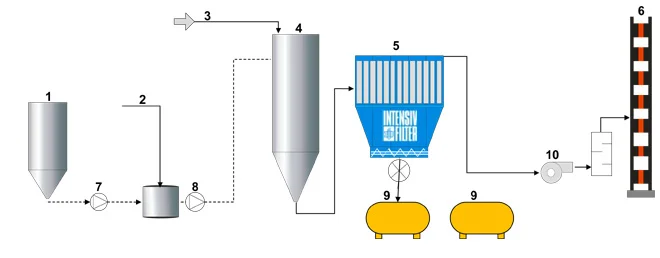
Filter for glass-kiln
- 1. NaOH tank
- 2. Water
- 3. Hot gas from the glass trough
- 4. Quench reactor
- 5. Filter for glass-kiln
- 6. Chimney
- 7. Dosing pump
- 8. Quench pump
- 9. Transport container
- 10. Induced draft
Required specifications
Typical design data | Residue combustion furnaces |
|---|---|
Gas volume | 38,000 |
Gas temperature | 180 – 200 |
Type of dust | Sodium sulphate, soda, borax, quartz |
Raw gas dust content | 10 – 25 |
Residual dust content | < 10 |
Cleaning | offline |
Filter medium | Polyimide |
Sorbent | Sodium hydroxide |
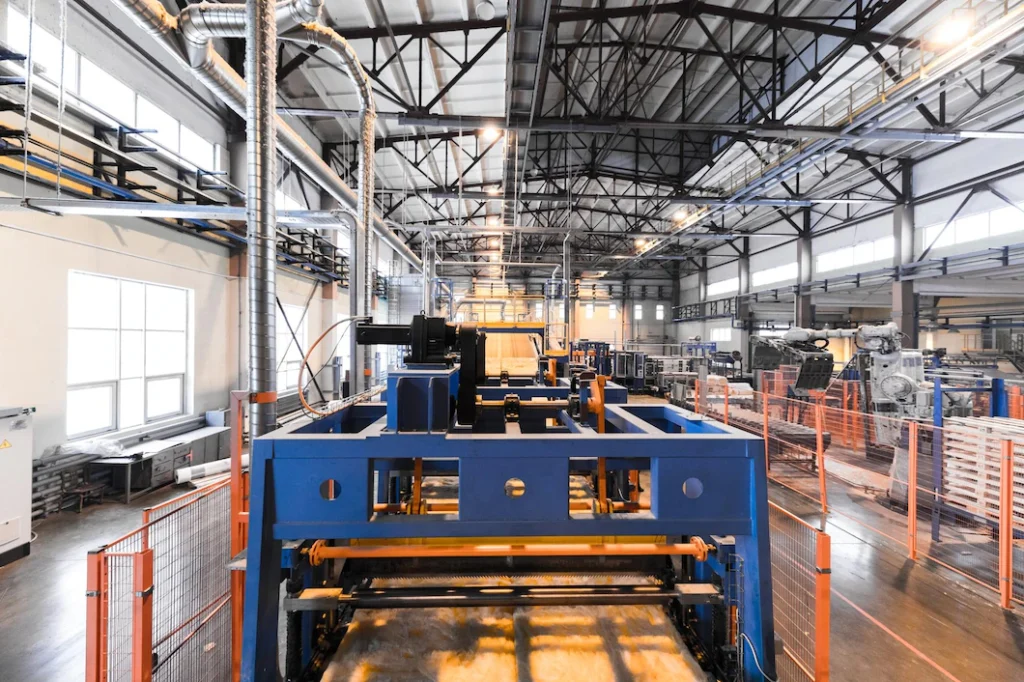
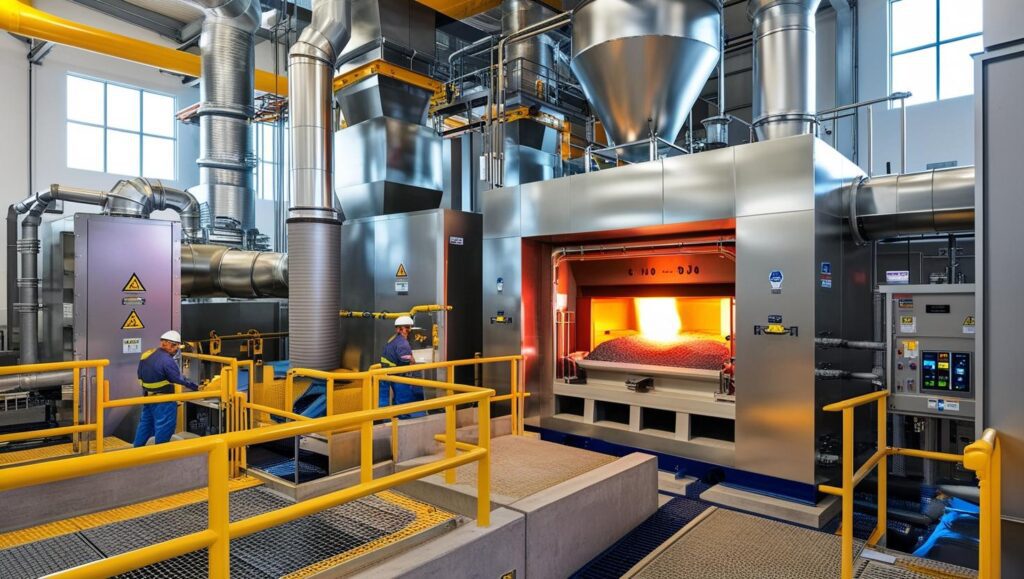
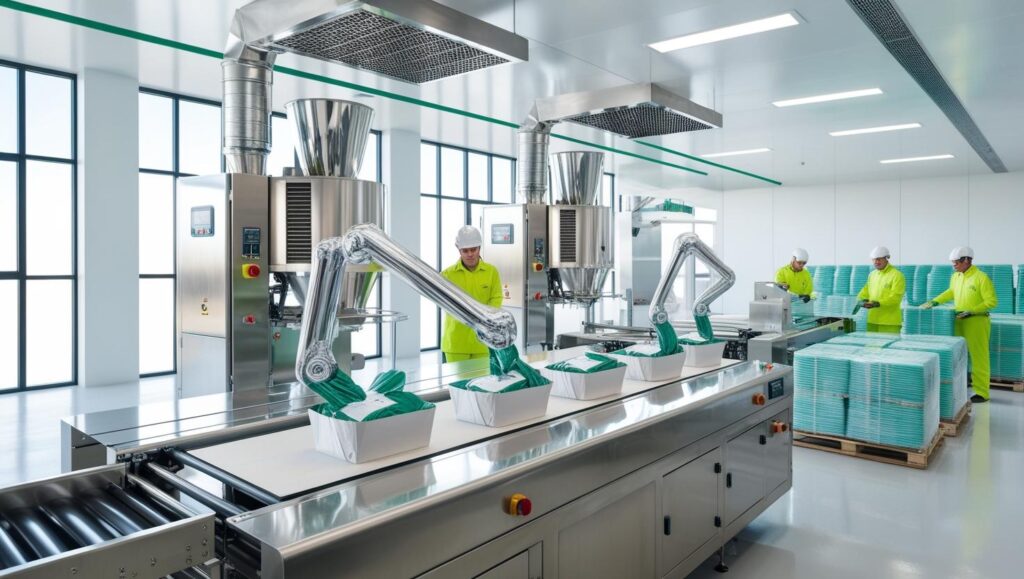
Applications for Glass Industry Dust Control
Filters airborne dust during the handling and storage of raw materials like silica, soda ash, and limestone, ensuring that dust doesn’t spread to other areas of the facility.

Controls airborne pollutants and particulate matter produced during the melting process, ensuring clean air around high-temperature furnace areas.

Reduces dust and fine particulate matter generated during the forming and molding of glass products, preventing contamination and enhancing product integrity.
Regulatory Landscape for Dust Control |
|---|
Air Quality Standards Compliance |
Worker Health & Safety Compliance |
Fire & Explosion Hazard Prevention |
Environmental Protection Compliance |
Real-Time Emission Monitoring |
Heat and Corrosion Resistance |
Reduced Downtime and Maintenance Costs |
Quality and Product Consistency |
Operational Cost Savings |
Dust Control Challenges in the Glass Industry |
|---|
High Dust Generation |
Heat and Corrosive Environments |
Worker Safety Risks |
Combustion and Explosion Hazards |
Maintaining Product Quality and Purity |
Product Contamination |
Equipment Wear and Tear |
Fumes and Gaseous Emissions |
Cross-Contamination |
Key Considerations for Effective Dust Control |
|---|
Efficient Dust and Fume Capture |
Chemical and Heat Resistance |
Optimized Airflow and Pressure Management |
Advanced Filtration Materials |
Routine Maintenance & Inspections |
Compliance with Regulatory Standards |
Customized Filtration Solutions |
Risk Mitigation for Hazardous Chemicals |
Flexible System Configurations |
Connect with us for Expert Consultation
Explore Our Other Services !




Frequently Asked Questions
Glass production generates significant amounts of fine, abrasive dust—especially silica-rich particles- during the handling of raw materials like sand, soda ash, limestone, and cullet. These particles pose serious health risks such as silicosis and respiratory issues. Effective filtration ensures worker safety, prevents equipment wear, maintains product purity, and enables compliance with environmental regulations requiring capture efficiencies up to 99.9%
Dust from glass crushing and handling is extremely abrasive and chemically inert, while silica content makes it carcinogenic at microscopic sizes. Cullet dust is highly irregular and abrasive, accelerating filter media wear and necessitating robust inlet design, heavy-duty hoppers, and air flow management to prevent rapid degradation of filter bags or cartridges .
Glass facilities typically employ fabric filters (baghouses) to achieve high-efficiency particulate control. In applications involving high temperatures or heavy silica abrasiveness, durable baghouse systems with abrasion-resistant media or cartridge-type collectors may be preferred. For processes generating acid gases or volatile emissions, supplementary wet scrubbers may be required.
Fine silica particles often bypass the industrial dust collector due to improper hood design, air leakage, or incorrect airflow balancing. Upgrading the baghouse filter and optimizing the industrial air filtration system helps improve particulate matter control and reduce glass manufacturing emissions.
A continuous rise in pressure drop in a baghouse filter is usually caused by sticky dust buildup, high furnace temperature fluctuations, or ineffective pulse cleaning. Proper filter media selection and stable airflow are critical for efficient air pollution control.
An electrostatic precipitator may lose efficiency due to poor gas distribution, fluctuating furnace load, or high resistivity dust. Regular system tuning and integration with secondary industrial emission control equipment help meet Central Pollution Control Board and air quality standards India requirements.
Dust leakage at conveyor and transfer points is commonly caused by poor enclosure sealing and inadequate suction velocity. Properly designed industrial dust collectors and localized fume extraction systems help reduce airborne silica dust and improve workplace safety.
Glass furnace exhaust contains acidic gases and corrosive vapors that can damage ducts and filtration systems over time. Installing a properly designed scrubber system improves gas cleaning efficiency and protects downstream air pollution control equipment.
A cyclone dust collector may underperform due to incorrect inlet velocity, poor cyclone geometry, or changes in dust particle size. Optimizing the pre-separation stage helps reduce loading on the baghouse filter and improves overall industrial air filtration efficiency.
Reducing glass manufacturing emissions requires a combination of optimized combustion, efficient electrostatic precipitators, high-performance baghouse filters, and advanced scrubber systems. A properly engineered APC setup helps industries comply with industrial emission standards India while supporting sustainable production.
Case Study


 EN_US
EN_US  UR
UR  AR
AR  NL
NL  MS
MS  DE
DE  FR
FR  IT
IT  FA
FA  VI
VI  KO
KO  RU
RU  ID
ID  FIL
FIL  KK
KK  UZ
UZ  BG
BG  CS
CS  HU
HU  SL
SL  SV
SV  PL
PL  TR
TR  FI
FI  ES
ES