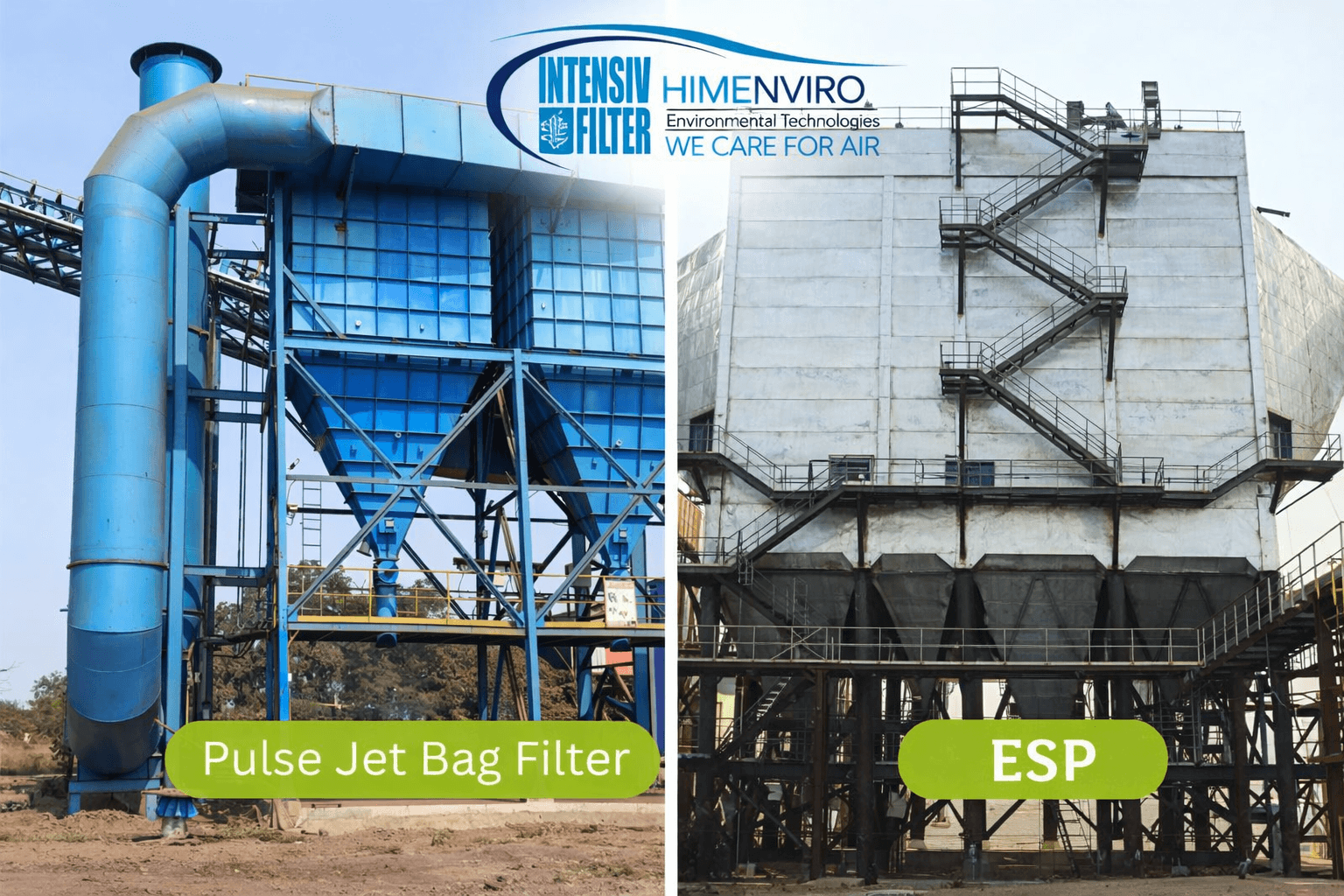
Quick overview
- Pulse jet bag filters catch dust well even when the dust types change.
- Electrostatic precipitators (ESP) keep the air moving easily but often fail when fuel quality shifts.
- Many plants change their ESP to a baghouse to follow strict emission control rules by 2026.
Understanding the core technology of pulse jet bag filters and electrostatic precipitators
A pulse jet bag filter uses fabric bags to stop dust from moving through an industrial gas stream. It acts as a self-cleaning dry system that takes out dirt using bursts of high-pressure air. You can imagine it as a massive, heavy-duty vacuum cleaner that shakes its bags clean on its own. These systems are reliable for keeping air clean. You can learn more about how these filters operate in various setups.
An electrostatic precipitator working method relies on electrical energy to grab particles. It charges these tiny bits of dust and pulls them onto metal plates. Think of it like a giant magnet for dirt. It uses electricity to trap smoke and dust floating in the air.
| Feature | Pulse Jet Bag Filter | Electrostatic Precipitator |
|---|---|---|
| Main method | Fabric bags trap dust | Electrical charges attract dust |
| Cleaning | Compressed air pulses | Plate vibration or rapping |
| Dust type | Works with any dust | Depends on dust electrical properties |
| Air pollution control | Very effective | Varies with fuel quality |
Key differences between pulse jet bag filter and ESP systems
Deciding between an electrostatic precipitator (ESP) and a pulse jet bag filter requires looking at how they handle dust. Each system performs differently in industrial settings. When asking about ESP vs bag filter — which is better — the answer depends on your specific needs.
- Efficiency comparison: Pulse jet bag filters regularly keep emissions below 5 mg/Nm³. ESP systems often struggle here because their efficiency changes based on dust resistivity.
- Differential pressure: ESPs have a low differential pressure of 10 to 20 mmWC. Bag filters require more force to push air through the fabric, usually between 100 and 150 mmWC.
- Sensitivity: ESP performance drops quickly if the coal type or moisture levels change. Bag filters handle these variations much better and stay stable.
- Space: Baghouses generally use less space than large ESP fields for the same amount of gas.
- Practical example: A cement plant switching from an ESP to a pulse jet bag filter often sees immediate stability in its emission levels — even when the kiln feed varies throughout the day.
Why plants are choosing ESP to bag filter conversion in 2026
Many industrial facilities face a difficult situation in 2026. Stricter CPCB emission norms are making older ESP units obsolete. These machines simply cannot meet new limits like 30 mg/Nm³ or 10 mg/Nm³ without massive and expensive expansions.
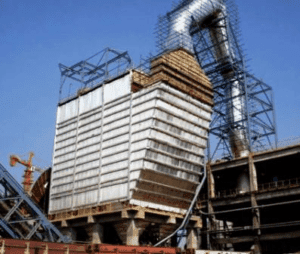
Plant managers now look for a smarter way to stay compliant. They choose ESP to bag filter conversion because it offers a practical path forward. This process involves taking the existing ESP casing and putting bag filter internals inside.
This retrofit strategy saves a lot of money. It uses the existing structure and ducting, which cuts down on construction costs and reduces plant downtime. Some people think an ESP costs less to run, but they are often wrong. Aging ESPs consume a lot of power and lead to expensive compliance failures. Upgrading to a bag filter system is often the more economical choice in the long run.
Industry-specific applications for pulse jet dust collectors
Pulse jet bag filters work well in many heavy industries. They clean the air by trapping dust on fabric bags. These systems deal with difficult materials that other machines cannot handle.
- Cement plant: These systems manage very rough dust from kilns and raw mills. The fabric filters resist wear from the gritty particles.
- Steel plant: High heat and thick dust clouds come from sinter plants and electric arc furnaces. Pulse jet systems remove these heavy loads with ease.
- Power plants: Biomass boilers create ash that is hard to catch with older methods. Baghouses pull this ash from the air better than electrostatic precipitators.
- Distilleries: Boilers for spent wash create sticky dust. Pulse jet systems use special filter materials to prevent these clumps from clogging the equipment.
Conclusion
The choice between a pulse jet bag filter and an electrostatic precipitator depends on your air quality goals. Electrostatic precipitators have lower pressure drops. However, pulse jet bag filters meet the strict emission limits found in today’s laws.
Frequently asked questions
What is the typical life of a filter bag?
Most industrial filter bags last between 2 to 4 years. This time frame depends on the gas temperature and the specific chemistry of the dust.
Can I use a bag filter for high-temperature gases?
Yes. Materials like PTFE or P84 handle high heat. They work well at constant temperatures up to 260°C.
Is a pulse jet bag filter better than an ESP for fine dust?
Yes. Bag filters remove small particles better than electrostatic precipitators. They catch sub-micron dust with high efficiency.
What is the main cause of high differential pressure?
High pressure usually happens because of bag blinding. Moisture often causes this issue. Poor pulse cleaning pressure also leads to this problem.
How much compressed air does a pulse jet filter need?
Air use changes based on the size of the system. New parts like the Coanda Injector cut down the amount of air a machine needs.

 EN_US
EN_US  UR
UR  AR
AR  NL
NL  MS
MS  DE
DE  FR
FR  IT
IT  FA
FA  VI
VI  KO
KO  RU
RU  ID
ID  FIL
FIL  KK
KK  UZ
UZ  BG
BG  CS
CS  HU
HU  SL
SL  SV
SV  PL
PL  TR
TR  FI
FI  ES
ES