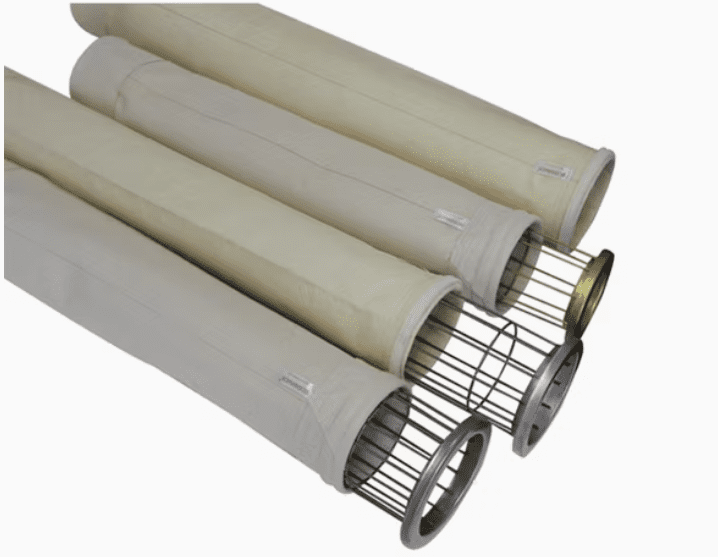
PTFE Filter Bag for Industrial Filtration | 2026 Engineering Guide
Quick Overview
- PTFE filter bags withstand heat up to 260°C.
- These bags resist chemicals across the full pH 0–14 range.
- Special membrane technology keeps dust on the surface of the bag.
- This surface filtration lowers pressure drops and saves electricity in pulse jet systems.
- Factories rely on these bags to follow CPCB emission rules.
- They handle aggressive flue gases that damage other materials.
Introduction to PTFE Filter Bags in Industrial Filtration
A PTFE filter bag is an industrial tool made from polytetrafluoroethylene fibers. It catches tiny dust particles in places with extreme heat or harsh chemicals. It is a tough fabric filter that stays solid even when it faces high temperatures or strong acids.
These bags work well in places like waste incineration plants. The plants push toxic gas through the bags to clean it. Standard filters like polyester would melt or fall apart in these conditions, but PTFE stays strong. This stability helps plants meet strict air rules and keeps the machines running without long breaks for repairs.

Key Technical Specifications of Teflon Filter Bags
Teflon filter bags offer specific physical traits that help them perform well in harsh industrial environments. They possess a very low coefficient of friction and high tensile strength. Engineers rely on these materials because they endure extreme conditions without breaking down. The way a bag works depends on its pore size. Smaller pores capture more dust, but they also change the speed at which air flows through the filter.
| Property | Specification |
|---|---|
| Material | 100% PTFE |
| Weight | 750–800 g/m² |
| Thickness | 0.65–0.75 mm |
| Air Permeability | 8–12 L/dm².min @ 200Pa |
| Continuous Temp | 260°C |
When engineers pick these bags, they look closely at the balance between airflow and particle capture. If the pores are too tight, the air moves slowly. This creates a high pressure drop across the filter. If the pores are too open, fine dust passes right through the needle felt. PTFE membrane filter bags provide a solution to this problem by separating the air and dust efficiently.
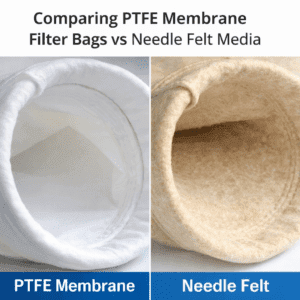
Comparing PTFE Membrane Filter Bags and Needle Felt Media
These two types of filter media handle dust in different ways. The choice impacts how much energy a plant uses and how often someone must change the bags.
- PTFE membrane filter bags use a thin, microporous layer to stop dust at the surface. This process is called surface filtration. Because the dust stays on the outside, it does not get stuck deep inside the fabric.
- Needle felt media works through depth filtration. The dust travels deep into the fiber matrix to get trapped. This buildup happens over time and makes the bags harder to clean.
- Plants prefer membrane bags when they need to reach near-zero emission levels. The smooth surface of the membrane allows dust to fall off easily during the cleaning cycle.
- Needle felt bags often face higher differential pressure because the dust hides inside the fibers. This forces the system to work harder, which consumes more electricity.
- The membrane acts as a barrier that keeps the fiber structure clean. This design feature extends the life of the bag and saves maintenance time.
Critical Advantages of Using PTFE Coated Filter Bags
PTFE coated filter bags use a fiberglass base fabric. Manufacturers dip this fabric in a PTFE bath. This process improves the chemical resistance of the bags. It also helps the bags resist moisture. People often think a coating is the same thing as a membrane. This is wrong. A coating covers the fibers to protect them. It does not provide the same tiny filtration level as an expanded PTFE membrane.
Warning: Do not use coated fiberglass in high-frequency pulse jet systems. These systems cause a lot of mechanical flexing. This motion breaks the glass fibers quickly.
Industrial Applications for High Temperature PTFE Filtration
PTFE filter bags work well when you have high heat and harsh chemicals. They help you keep machines running longer and save money on repairs.
In the cement industry, these bags handle dust from the kiln and raw mill. They manage the abrasive dust and high heat near the preheater exits.
Steel plants use these bags to clean dust from sinter plants. The bags handle the changes in fume loads. They provide the chemical stability needed for these tough conditions.
Power plants use these bags to trap fly ash in coal-fired boilers. They work best when the coal has high sulfur levels. They protect against damage when the acid dew point creates a risk for the system.
Best Practices for PTFE Filter Bag Maintenance and Failure Prevention
Keeping a baghouse in good shape requires steady attention. Operators must watch the differential pressure and emission levels. This effort keeps the site in line with CPCB norms.
A few common problems lead to filter bag failure. Workers should use this list to keep their system running well:
- Abrasive wear happens where the bag touches the cage. Workers must check that the cage fits the bag perfectly. Proper tensioning stops the bag from rubbing and tearing.
- Hydrolysis and chemical damage occur if the internal temperature drops. Operators should keep the system running above the acid dew point to prevent this chemical attack.
- Regular checks on the seal between the bag and the cage prevent leaks.
- Quick response to small changes in pressure readings stops bigger problems from starting.
Selecting a Reliable PTFE Filter Bags Manufacturer
Choosing the right PTFE filter bags manufacturer involves looking at more than just the price tag. A good supplier helps you manage your long-term expenses. They provide engineering support that keeps your system running well for a long time. You want a partner that looks at your total lifecycle costs, not just the initial purchase price.
You should search for a supplier that offers system-level audits. These checks help you understand how your bags work within the whole machine. Good manufacturers also help with pulse jet optimization to save energy. They must ensure that their products meet global safety standards, including rules like ATEX.
Engineering-driven solutions make a big difference in plant performance. Companies like Intensiv Filter Himenviro focus on how a filter works over many years. They prioritize durable performance over a lower initial cost. This approach stops frequent replacements and prevents unexpected downtime.

Conclusion
Properly managed industrial filtration using PTFE filter bags lowers operational risks. It also cuts down energy use and keeps your plant in line with environmental rules. These steps lead to more stable operations and predictable plant performance.
Frequently Asked Questions
What is the maximum operating temperature for PTFE filter bags?
These bags handle continuous heat up to 260°C. They resist peak temperatures between 280°C and 300°C based on the specific substrate.
How does a PTFE membrane affect differential pressure?
The membrane allows for surface filtration. This makes dust release easier during pulsing and keeps differential pressure stable.
Can PTFE bags handle both acids and alkalis?
Yes. PTFE is chemically inert. It resists almost all corrosive substances across the entire pH scale.
What is the typical lifespan of a PTFE bag?
These bags often last 4 to 6 years in well-maintained systems. This is a much longer lifespan than standard synthetic media.

 EN_US
EN_US  UR
UR  AR
AR  NL
NL  MS
MS  DE
DE  FR
FR  IT
IT  FA
FA  VI
VI  KO
KO  RU
RU  ID
ID  FIL
FIL  KK
KK  UZ
UZ  BG
BG  CS
CS  HU
HU  SL
SL  SV
SV  PL
PL  TR
TR  FI
FI  ES
ES