Quick Overview
- Industrial cartridge filters remove fine dust from air streams with high efficiency.
- These units provide more surface area than traditional bags. They fit well in compact dust collector systems.
- Plant managers must select the right filter based on dust type and heat levels to keep industrial filtration running well.
What is a Cartridge Filter in Industrial Dust Collection
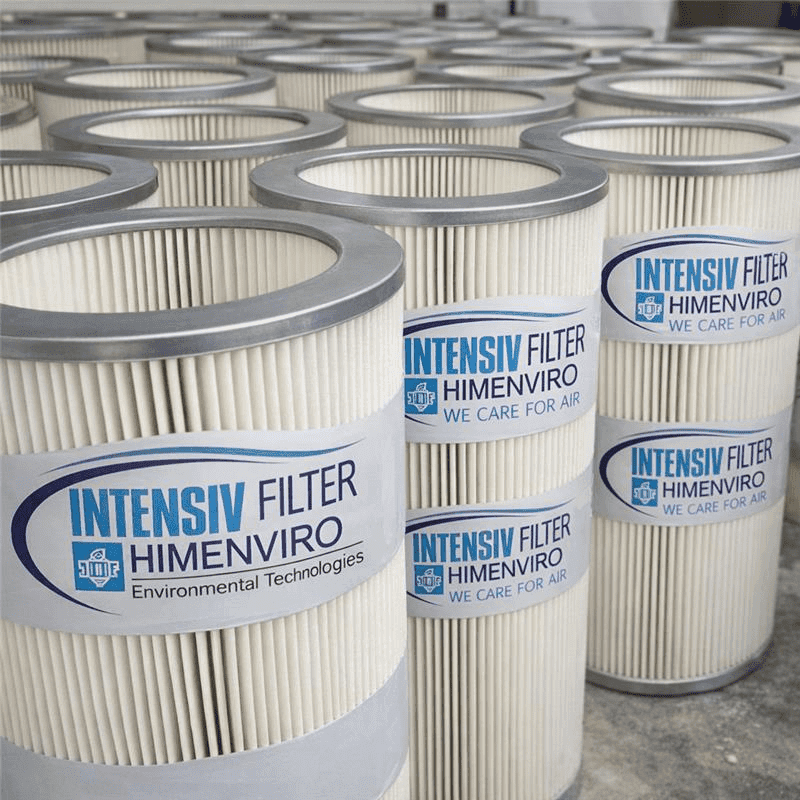
An industrial filter cartridge is a cylindrical device with pleated filter media. It captures airborne particles as air moves through the surface or the depth of the material. This technology keeps air quality high by preventing dust from escaping into the work area.
Think of it as a heavy-duty air filter for a factory. It traps dust on the outside of the pleats so only clean air passes through the middle. These filters handle high-velocity air and abrasive dust in places like steel mills or cement plants better than standard options. Unlike simple water filters, this dust collector filter uses robust materials to survive harsh conditions.
Basic Components and Construction of Filter Cartridges
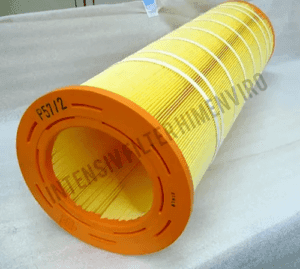
A cartridge filter contains several parts that work together to clean the air. Manufacturers build these units to last while handling heavy amounts of dust. Here are the main parts:
- Filter media: This is the pleated material. It catches the dust. Common materials include polyester or PTFE.
- Inner core: This is a metal cage. It sits inside the pleats. It stops the filter from crushing when the pressure gets too high.
- End caps: These parts sit at the top and bottom of the filter. They seal the media. They also provide a way to mount the filter inside the machine.
- Gaskets: These are rubber rings. They stop dust from sneaking past the filter at the tube sheet.
How Industrial Cartridge Filters Work in Dust Collectors
Industrial dust collectors use mechanical filtration to keep the air clean. The system draws dirty air through the pleated media. Particles get stuck on the surface of the pleats while the clean air passes through.
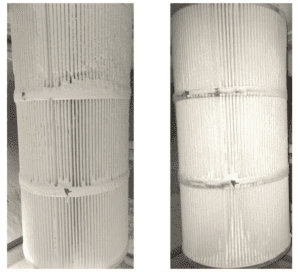
A layer of dust eventually builds up on the outside of the pleats. People call this layer a filter cake. Many users think a dirty filter is a bad thing, but the filter cake actually helps the system catch even finer dust particles. The cake acts like a secondary barrier.
The system only needs cleaning when the filter cake gets too thick. A pulse jet cleaning system handles this task. It shoots a short, sharp blast of compressed air from the inside of the cartridge toward the outside. This sudden force knocks the dust cake off the pleats and sends the debris falling into the hopper below. The process resets the filter so it can start catching dust again.
PTFE Coated Cartridge Filter for Sticky and Moist Dust
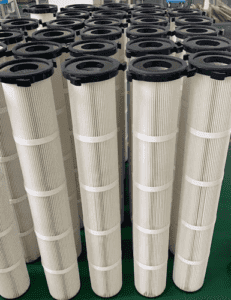
A PTFE coated cartridge filter uses a special non-stick surface to stop sticky or moist dust from getting stuck in the filter. It works just like a non-stick frying pan in your kitchen. This thin layer lets the dust fall off easily whenever the cleaning pulses happen. Keeping the dust from building up helps maintain a steady Differential Pressure (ΔP). When the ΔP stays low, your system runs much better.
For example, many biomass boilers in distilleries deal with sticky ash that clogs regular filters very quickly. By switching to a PTFE-coated version, the ash falls off the filter instead of hardening on the media. This fix keeps the airflow steady and stops the filter from getting completely blocked.
Common Problems Like Cartridge Filter Choking and Leakage
Maintenance teams often face issues that hurt their efficiency and plant safety. Use this chart to identify and fix common filter problems quickly.
| Problem | Cause | Impact | Solution |
|---|---|---|---|
| High Differential Pressure (ΔP) | Blinded media or poor cleaning | Fan load increases energy costs | Optimize pulse frequency |
| Dust Leakage | Damaged seals or torn media | Emission compliance risk | Inspect gaskets and seal integrity |
When the cartridge filter choking problem happens every single week, the system clearly struggles. Plants often choose to upgrade to better media in these cases. This move helps them meet strict emission rules while keeping their energy bills under control. Regular checks on the seals also stop leakage before it becomes a major headache for the team.
When to Replace a Cartridge Filter in a Dust Collector
You should keep an eye on your equipment to know when to get a replacement filter cartridge for a dust collector. Waiting for the unit to break causes more problems. Use these signs to help you decide when to change cartridge filter media:
- Look at your pressure gauge. Replace the filter when the differential pressure stays above 150 mmWC. Do this even if you just cleaned it.
- Watch the pressure trends over time. Do not wait for the filter to tear or rip apart. Use these numbers to plan your maintenance downtime.
- Check the air at the stack. If you see dust coming out, your filter has a hole. You must change it right away to stay within emission limits.
Proper filter life tracking saves you a lot of headache. A dirty filter makes your machine work harder. This wastes electricity.
Conclusion
Good management of your filters keeps your machines running well. It also lowers your monthly power bill. Clean filters help plants meet air quality rules. Proper maintenance keeps the air clear and reduces total costs for the facility.
Frequently Asked Questions
How long do industrial cartridge filters last?
Most filters last between 12 and 24 months. This depends on how much dust they collect and how often they get cleaned.
Can you wash dust collector cartridges?
Usually, no. Water often ruins the filter material. You should only wash them if the manufacturer makes them for wet cleaning.
What is the difference between a bag filter and a cartridge filter?
Cartridges have pleated material. This design packs more surface area into a smaller space compared to standard bags.
Why is my cartridge filter choking so fast?
This happens because of high moisture levels. It also occurs if your pulse settings are wrong or if the air-to-cloth ratio is too high for the filter.
When should I use PTFE coated filters?
Use these filters for sticky or very fine dust. The coating helps the dust fall off the filter easier during the cleaning cycle.

 EN_US
EN_US  UR
UR  AR
AR  NL
NL  MS
MS  DE
DE  FR
FR  IT
IT  FA
FA  VI
VI  KO
KO  RU
RU  ID
ID  FIL
FIL  KK
KK  UZ
UZ  BG
BG  CS
CS  HU
HU  SL
SL  SV
SV  PL
PL  TR
TR  FI
FI  ES
ES