ESP vs Bag Filter for Coal Power Plants: Which Technology Delivers Better Emission Control?
Invoering
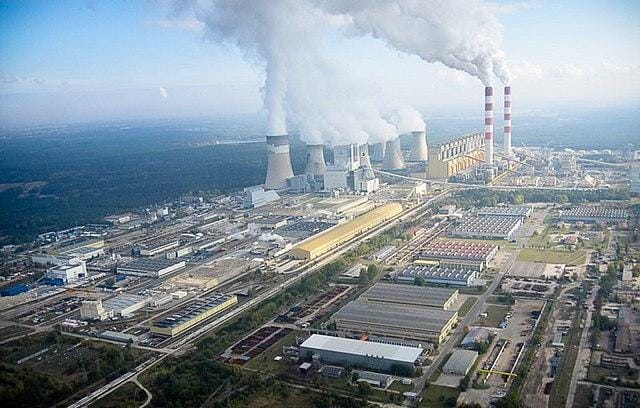
Coal-fired power plants remain one of the largest contributors to industrial particulate emissions worldwide. With tightening environmental regulations, increasing public scrutiny, and rising pressure to improve operational efficiency, plant heads are frequently faced with a critical decision:
Should the plant continue operating with an Electrostatic Precipitator (ESP), upgrade the existing ESP, or retrofit to a Bag Filter system?
For decades, ESPs have been the dominant particulate control technology in thermal power plants due to their ability to handle massive flue gas volumes with low pressure drop. However, stricter particulate emission norms and variable coal quality have exposed limitations in many aging ESP installations.
Modern pulse jet bag filters have emerged as a compelling alternative, delivering ultra-low emissions, stable performance, and greater resilience to changes in operating conditions.
This article provides a technical comparison of ESP and Bag Filter technologies to help plant heads make informed decisions regarding future emission control investments.
Understanding the Challenge of Coal Power Plant Emissions
Coal combustion produces large quantities of fly ash, consisting of fine particulate matter carried within the flue gas stream.
Typical fly ash characteristics include:
| Parameter | Typische waarde |
|---|---|
| Deeltjesgrootte | 0.1–100 μm |
| Fly Ash Loading | 10–80 g/Nm³ |
| Gas Temperature | 120–180°C |
| Gas Volume | Up to 2 million Nm³/hr |
| Ash Characteristics | Variable |
Challenges include:
- ✓Fine particle capture
- ✓Variable ash resistivity
- ✓Boiler load fluctuations
- ✓Coal quality variation
- ✓Aging pollution control equipment
- ✓Regulatory compliance
These factors significantly influence the performance of both ESPs and Bag Filters.
How an Electrostatic Precipitator (ESP) Works
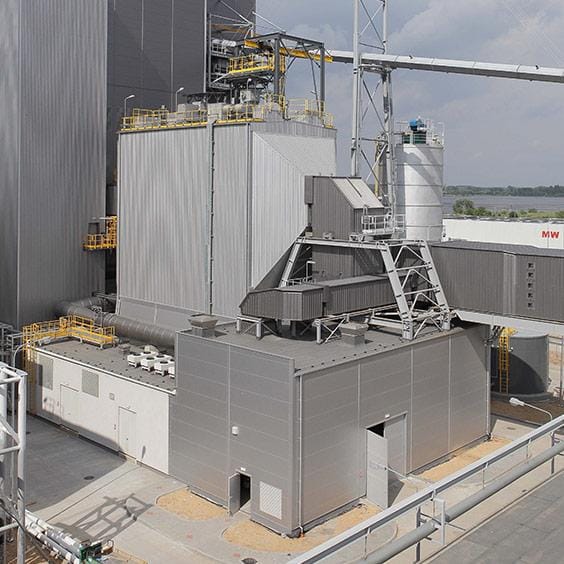
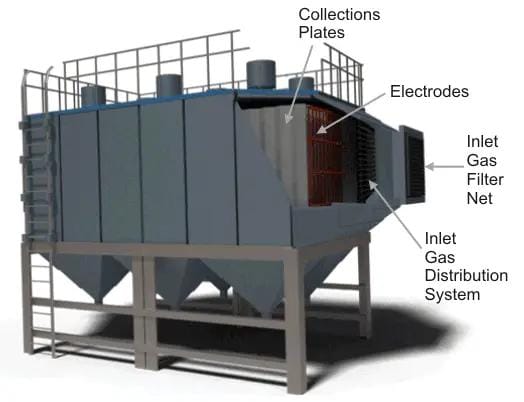
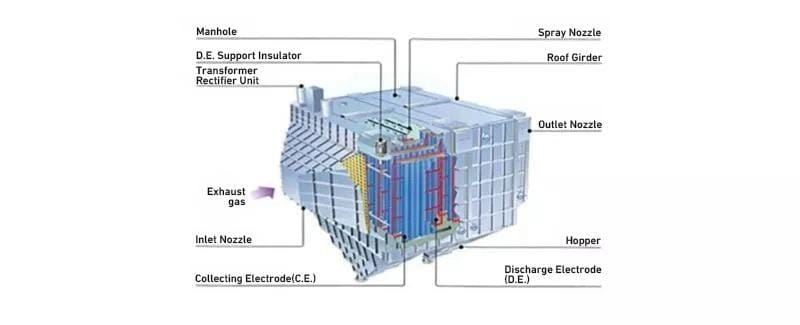
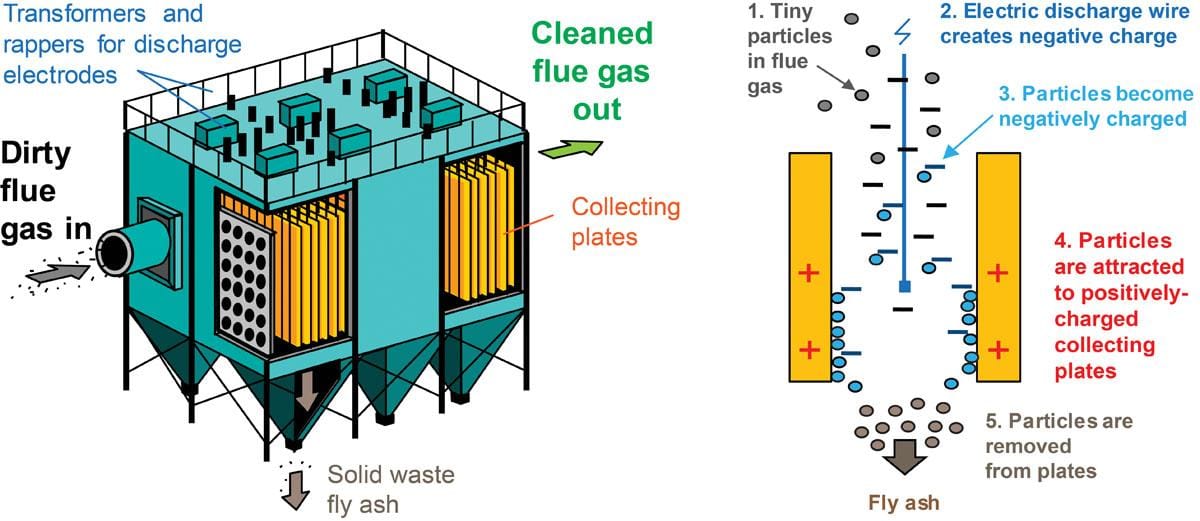
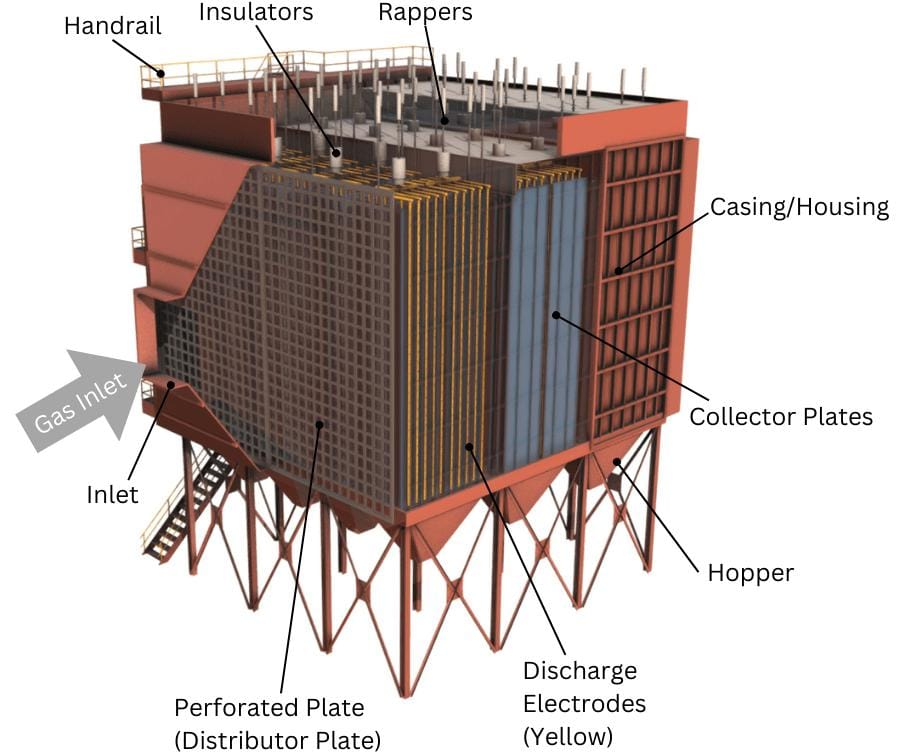
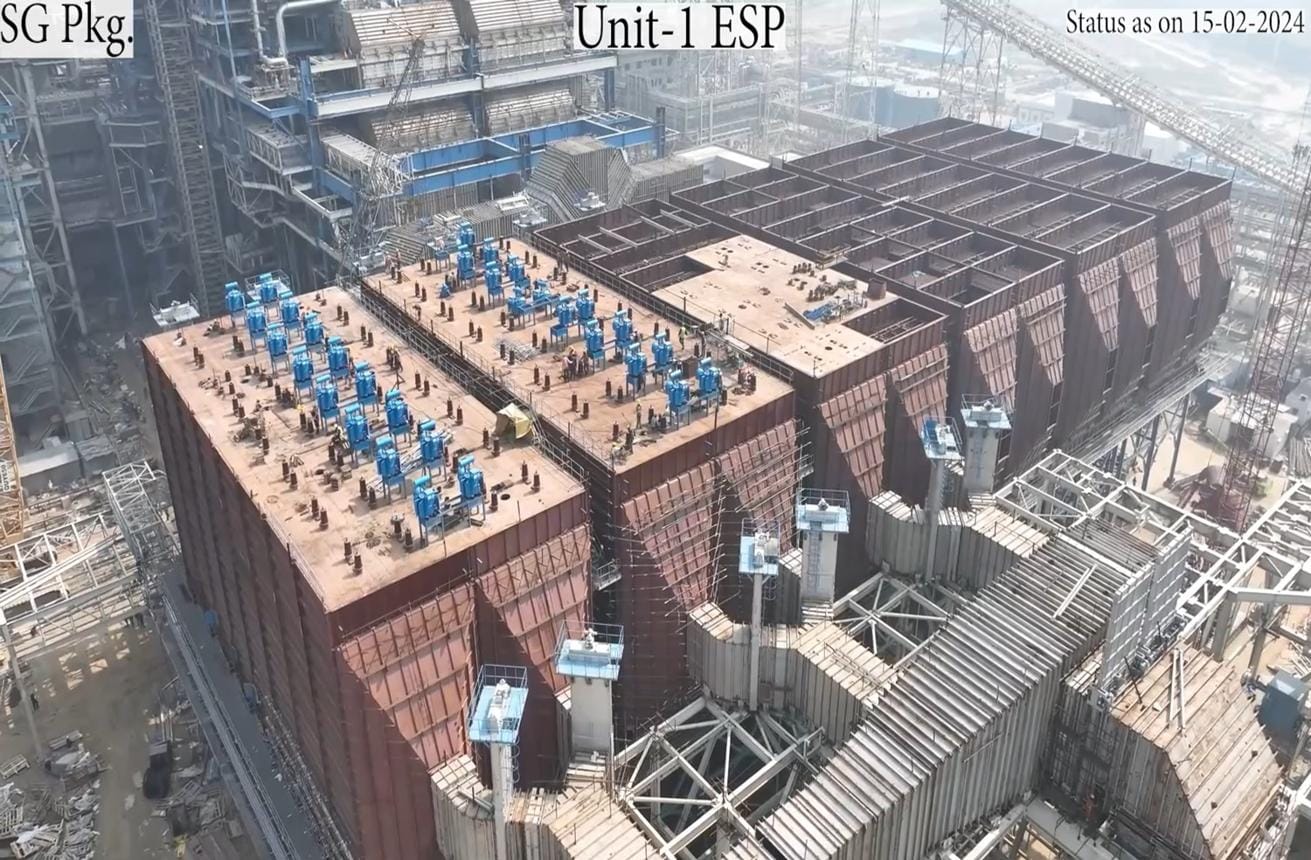
An ESP removes particulate matter using electrostatic attraction.
Werkingsprincipe
- ✓Dust-laden flue gas enters the ESP.
- ✓High-voltage discharge electrodes create an electrical field.
- ✓Fly ash particles become electrically charged.
- ✓Charged particles migrate toward collection plates.
- ✓Periodic rapping removes accumulated ash.
- ✓Dust falls into hoppers and is discharged.
Because particle capture depends on electrical charging, ESP performance is heavily influenced by fly ash characteristics.
Advantages of ESP Technology
Lage drukval
Typical pressure drop:
100–200 Pa
This reduces induced draft fan power consumption and lowers operating costs.
Suitable for Large Gas Volumes
ESPs can efficiently process very high flue gas volumes generated by large coal-fired boilers.
Long Equipment Life
Many ESP systems remain operational for decades with proper maintenance.
Low Mechanical Wear
Minimal moving components reduce routine maintenance requirements.
Limitations of ESP Systems
While ESPs remain effective in many applications, they face challenges under modern operating conditions.
Sensitivity to Fly Ash Resistivity
ESP efficiency is directly affected by ash electrical properties.
Problems occur when ash exhibits:
- ✓High resistivity
- ✓Low sulfur content
- ✓Variable chemistry
This can result in:
- ✓Back corona
- ✓Reduced particle charging
- ✓Increased stack emissions
Load Variation Sensitivity
ESP performance often deteriorates during:
- ✓Low-load operation
- ✓Frequent load changes
- ✓Boiler cycling
Difficulty Achieving Ultra-Low Emissions
Many older ESPs struggle to consistently achieve:
<10 mg/Nm³ particulate emissions
without major upgrades.
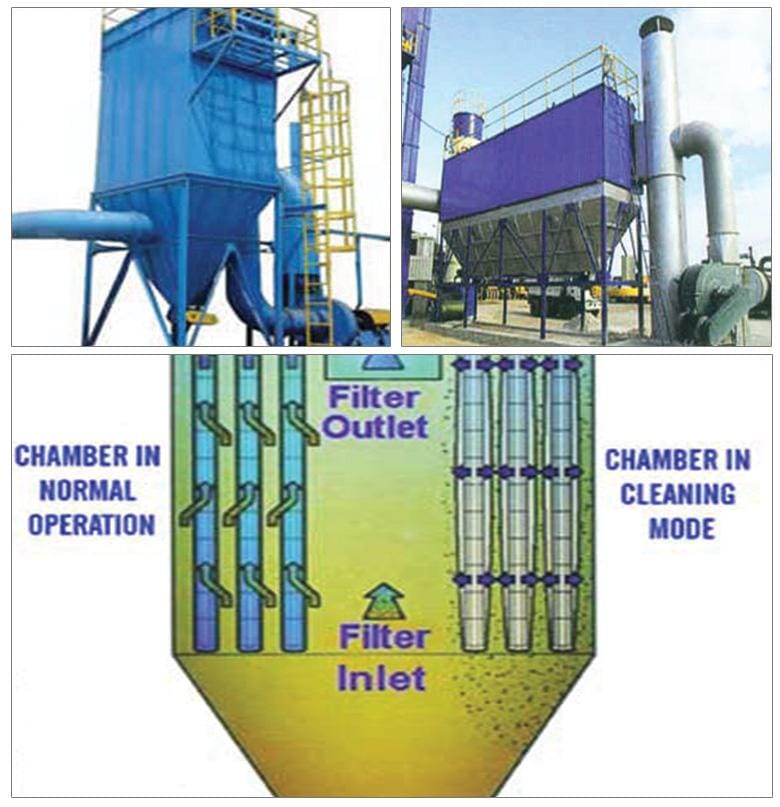
How a Bag Filter Works
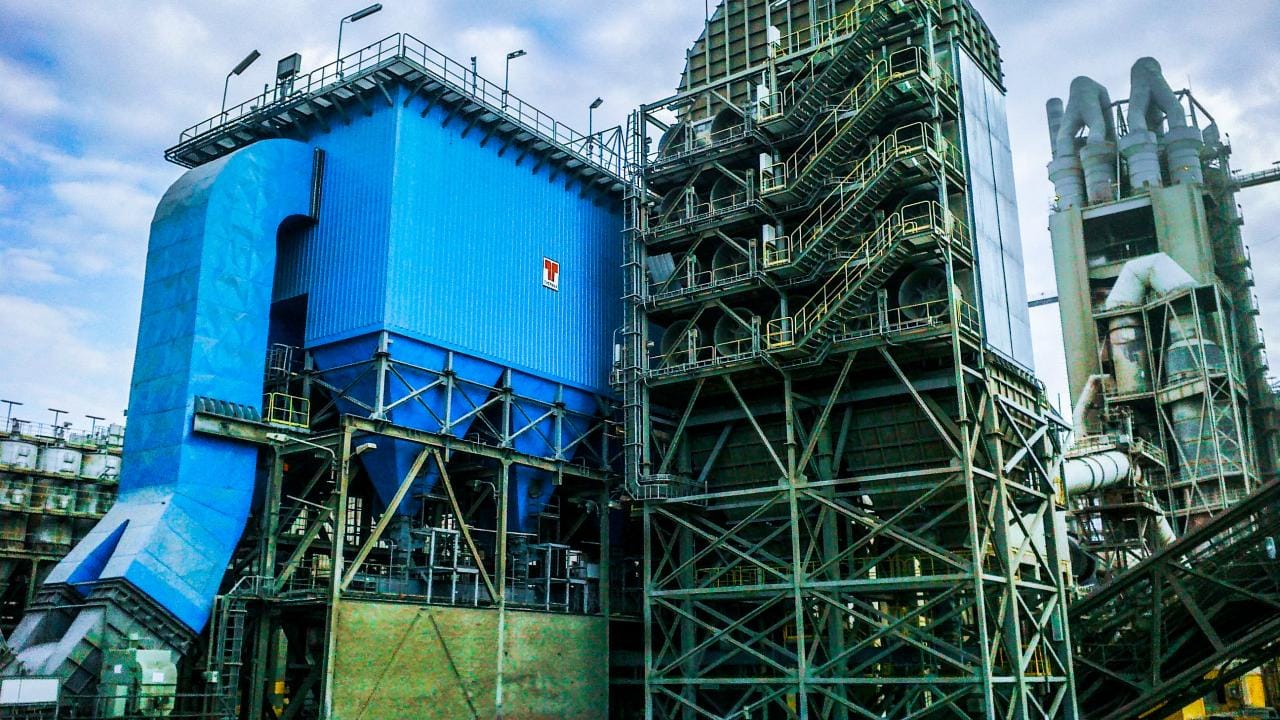
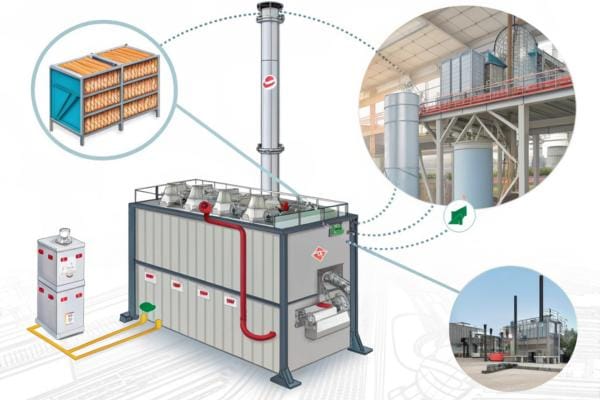
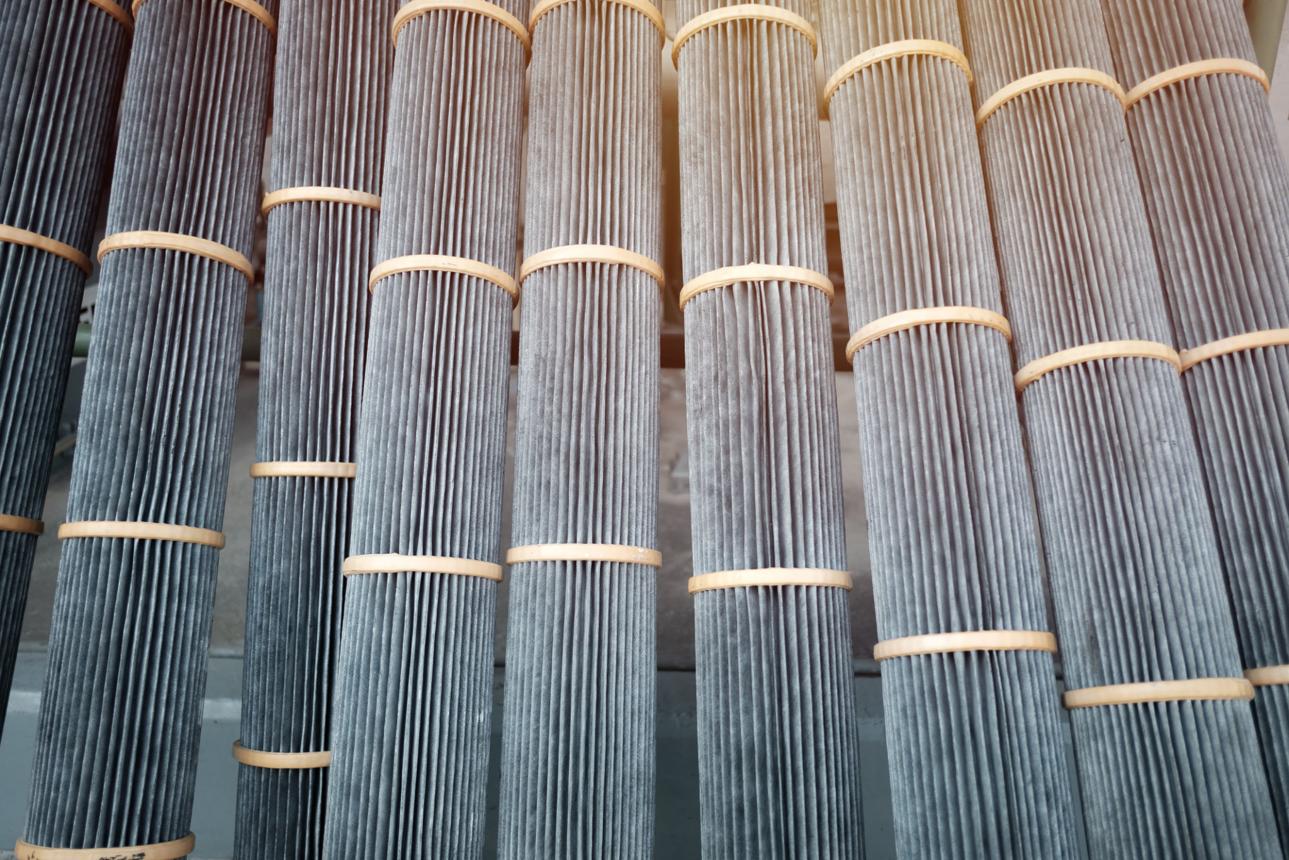
Bag Filters use fabric media to physically separate dust particles from flue gas.
Werkingsprincipe
- ✓Dust-laden gas enters the baghouse.
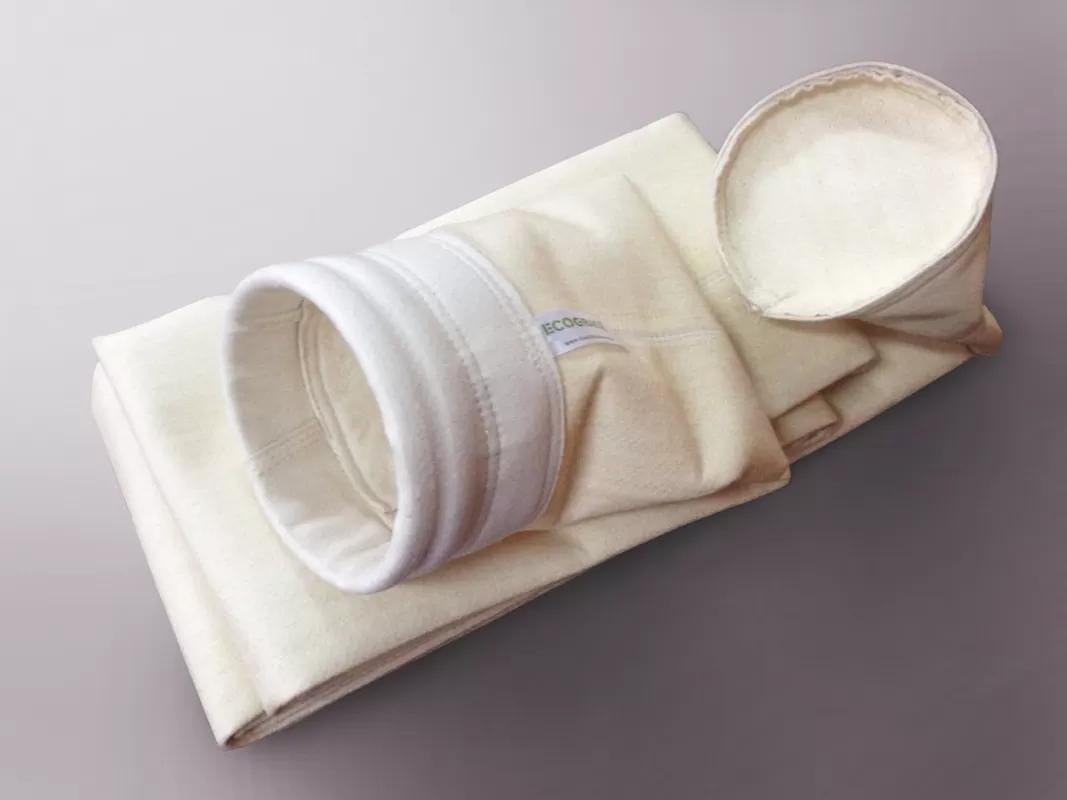
- ✓Gas passes through filter bags.
- ✓Particulate matter is retained on the bag surface.
- ✓Clean gas exits through the clean-air plenum.
- ✓Pulse jet cleaning removes accumulated dust.
- ✓Dust falls into hoppers for disposal.
Unlike ESPs, filtration performance does not depend on fly ash electrical properties.
Voordelen van zakfilters
Superior Fine Particle Collection
Bag filters achieve:
99.9% collection efficiency
including PM2.5 and fine particulate fractions.
Consistent Emission Performance
Bag filters maintain stable emissions despite:
- ✓Coal quality changes
- ✓Load fluctuations
- ✓Ash chemistry variations
Ultra-Low Emission Capability
Modern systems can consistently achieve:
| Technologie | Typical Outlet Emissions |
|---|---|
| Older ESP | 50–100 mg/Nm³ |
| Upgraded ESP | 20–30 mg/Nm³ |
| Modern ESP | 10–20 mg/Nm³ |
| Pulse Jet-zakfilter | <10 mg/Nm³ |
| PTFE Membrane Bag Filter | <5 mg/Nm³ |
Future Compliance Readiness
Bag filters are well-positioned to meet increasingly stringent environmental regulations.
ESP vs Bag Filter: Side-by-Side Comparison
| Parameter | ESP | Zakfilter |
|---|---|---|
| Collection Mechanism | Elektrostatisch | Mechanical Filtration |
| Fijnstofafvang | Goed | Uitstekend |
| PM2.5 Removal | Gematigd | Uitstekend |
| Emission Consistency | Variable | Hoog |
| Sensitivity to Coal Quality | Hoog | Laag |
| Drukval | Laag | Hoger |
| Startup Performance | Variable | Stable |
| Future Compliance | Challenging | Strong |
| Retrofit Flexibility | Gematigd | Uitstekend |
| Typical Emissions | 20–50 mg/Nm³ | <10 mg/Nm³ |
Impact of Coal Quality on Performance
One of the biggest concerns for power plant operators is fuel variability.
Coal quality affects:
- ✓Fly ash composition
- ✓Sulfur content
- ✓Ash resistivity
- ✓Particle size distribution
ESP Performance
Changes in ash resistivity can significantly impact collection efficiency.
Plants using:
- ✓Imported coal
- ✓Washed coal
- ✓Blended coal
often experience fluctuating ESP performance.
Bag Filter Performance
Bag filters remain largely unaffected by ash resistivity.
This allows:
- ✓Stable operation
- ✓Predictable emissions
- ✓Consistent compliance
even when fuel characteristics change.
Operating Cost Considerations
ESP
Voordelen:
- ✓Lagere drukval
- ✓Lower fan energy consumption
Costs include:
- ✓Transformer rectifiers
- ✓High-voltage systems
- ✓Electrode maintenance
- ✓Rapping system maintenance
Zakfilter
Voordelen:
- ✓Better emission performance
- ✓Simpler collection mechanism
Costs include:
- ✓Filter bag replacement
- ✓Compressed air consumption
- ✓Higher fan power requirement
Plant heads should evaluate total lifecycle cost rather than focusing solely on capital expenditure.
ESP Retrofit or Bag Filter Retrofit?
Many coal-fired power plants currently face three options:
Option 1: Maintain Existing ESP
Suitable when:
- ✓Current emissions are compliant
- ✓Coal quality is stable
- ✓Equipment condition is good
Option 2: ESP Upgrade
Suitable when:
- ✓Minor performance improvements are required
- ✓Structural integrity remains sound
Option 3: Bag Filter Retrofit
Suitable when:
- ✓Emission targets are below 10 mg/Nm³
- ✓ESP performance is inconsistent
- ✓Long-term compliance is critical
- ✓Plant modernization is planned
Hybrid Filters: Combining the Best of Both Technologies
Hybrid Filters integrate:
- ✓Electrostatic precipitation
- ✓Fabric filtration
Benefits include:
- ✓Lower dust loading on bags
- ✓Reduced pressure drop
- ✓Improved filter life
- ✓Ultra-low emissions
For large utility boilers, hybrid filtration systems are increasingly being considered where both operational efficiency and environmental performance are required.
Which Technology Should Plant Heads Choose?
Choose ESP When:
- ✔ Existing system performs adequately
- ✔ Emission limits are moderate
- ✔ Pressure drop must remain minimal
- ✔ Capital budgets are limited
Choose Bag Filters When:
- ✔ Emission targets are below 10 mg/Nm³
- ✔ Coal quality varies significantly
- ✔ Future regulations are expected to tighten
- ✔ PM2.5 capture is important
- ✔ Long-term compliance is a priority
- ✔ Existing ESP performance is declining
Conclusie
Both ESPs and Bag Filters continue to play important roles in coal-fired power plants. ESPs offer low pressure drop, proven reliability, and suitability for large gas volumes. However, their performance can be influenced by ash resistivity, coal quality, and operating conditions.
Bag Filters deliver superior particulate capture, stable emissions performance, and greater resilience to fuel variability. For power plants targeting ultra-low emissions and future-ready compliance, bag filters often provide the most reliable long-term solution.
The optimal decision depends on plant-specific operating conditions, compliance requirements, and lifecycle cost objectives. A detailed technical assessment is essential before selecting the most appropriate technology.
Veelgestelde vragen (FAQ)
Which technology provides lower emissions: ESP or Bag Filter?
Bag Filters generally provide lower and more consistent emissions, often achieving below 10 mg/Nm³.
Why does coal quality affect ESP performance?
ESP efficiency depends on fly ash resistivity, which varies with coal composition and combustion conditions.
Are Bag Filters more expensive to operate?
Bag Filters typically have higher pressure drop and require compressed air, but often deliver superior compliance performance.
Can an existing ESP be converted into a Bag Filter?
Yes. Many power plants have successfully completed ESP-to-Bag Filter retrofit projects to meet stricter emission standards.
What is a Hybrid Filter?
A Hybrid Filter combines electrostatic precipitation and fabric filtration to achieve ultra-low emissions with optimized operating performance.
Download the Coal Power Plant Filtration Selection Guide
Free Technical PDF (Gated Content)
Learn:
- ✓ESP vs Bag Filter sizing criteria
- ✓Retrofit feasibility checklist
- ✓Emission performance benchmarks
- ✓Lifecycle cost comparison
- ✓Future compliance strategy
 NL
NL  EN_US
EN_US  UR
UR  AR
AR  MS
MS  DE
DE  FR
FR  IT
IT  FA
FA  VI
VI  KO
KO  RU
RU  ID
ID  FIL
FIL  KK
KK  UZ
UZ  BG
BG  CS
CS  HU
HU  SL
SL  SV
SV  PL
PL  TR
TR  FI
FI  ES
ES