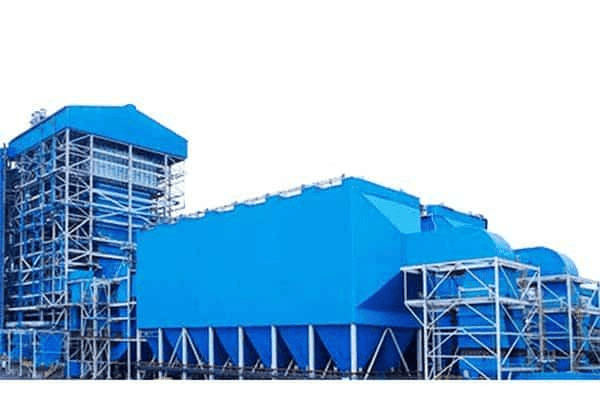
Paano Gumagana ang mga Electrostatic Precipitator: Ang Kumpletong Gabay sa Inhinyeriya
Ang mga Electrostatic Precipitator (ESP) ay kabilang sa mga pinakalawak na ginagamit na sistema ng pagkontrol ng polusyon sa hangin sa mga planta ng kuryente, planta ng semento, gilingan ng bakal, pasilidad ng waste-to-energy, gilingan ng pulp at papel, at maraming industriya ng proseso. Ang kanilang kakayahang mag-alis ng particulate matter na may kahusayan na higit sa 99% ay ginagawa silang isang kritikal na bahagi sa pagkamit ng pagsunod sa kapaligiran at pagbabawas ng mga emisyon ng stack.
Ang pag-unawa kung paano gumagana ang isang electrostatic precipitator ay nangangailangan ng kaalaman sa electrical engineering, gas dynamics, particle charging mechanisms, corona discharge physics, at mga proseso ng pagkolekta ng particulate.
Ang gabay na ito ay nagbibigay ng komprehensibong paliwanag sa antas ng inhinyeriya tungkol sa prinsipyo ng paggana ng ESP, mga pangunahing bahagi, mga parameter ng pagpapatakbo, mga kalkulasyon ng pagganap, at mga aplikasyong pang-industriya.
Ano ang isang Electrostatic Precipitator?
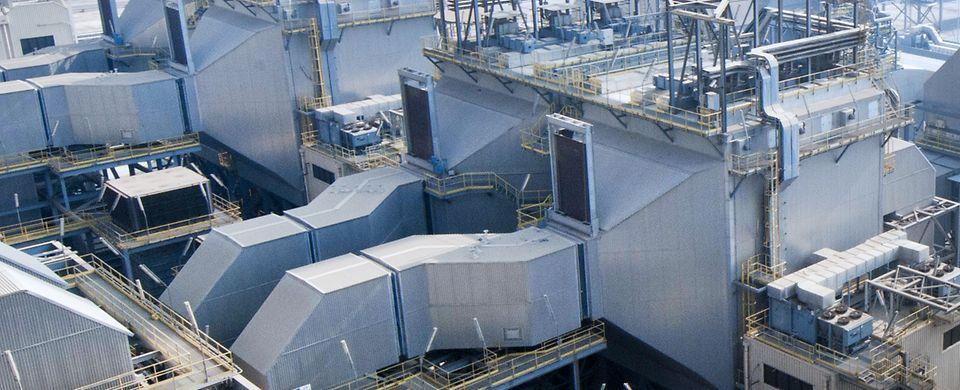
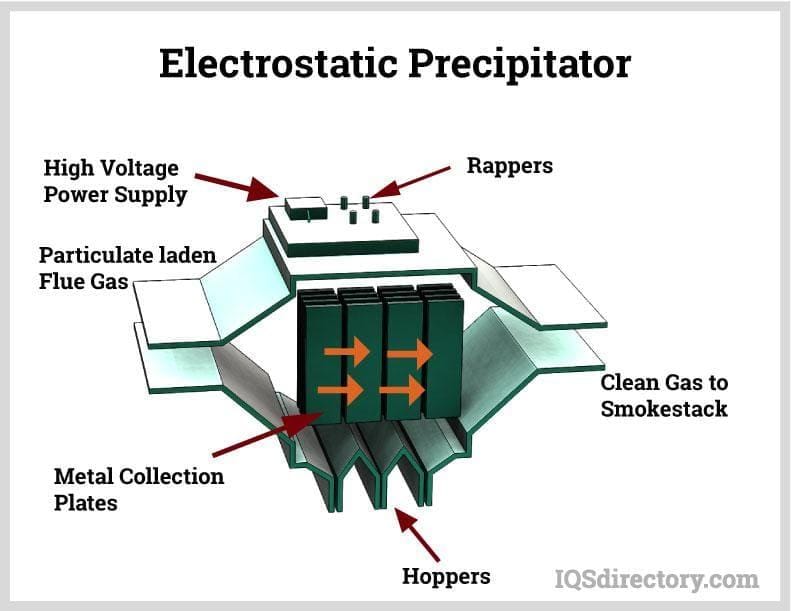
Ang Electrostatic Precipitator (ESP) ay isang aparato sa pagsasala na nag-aalis ng mga nakabitin na particulate matter mula sa isang daloy ng gas gamit ang mga puwersang electrostatic.
Hindi tulad ng mga bag filter, na umaasa sa pisikal na pagsasala sa pamamagitan ng filter media, kinukuha ng ESP ang mga particle sa pamamagitan ng kuryenteng pag-charge sa mga ito at pag-akit sa mga ito sa mga ibabaw na pangongolekta na may kabaligtaran na karga.
Karaniwang kahusayan sa pagkolekta:
| Laki ng Particle | Kahusayan ng Pagkolekta |
|---|---|
| >10 µm | >99.9% |
| 2–10 µm | 99–99.8% |
| 0.5–2 µm | 95–99% |
| <0.5 µm | Sona ng mas mababang kahusayan |
Bakit Gumagamit ang mga Industriya ng mga ESP
Kabilang sa mga pangunahing bentahe ang:
- ✓Napakababang pagbaba ng presyon
- ✓Kakayahang makayanan ang mataas na temperatura ng gas
- ✓Mababang gastos sa pagpapatakbo
- ✓Angkop para sa malalaking dami ng gas
- ✓Mataas na kahusayan sa pagkolekta
- ✓Mahabang buhay ng kagamitan
- ✓Patuloy na operasyon
Ang mga industriyang karaniwang gumagamit ng mga ESP ay kinabibilangan ng:
- ✓Mga Planta ng Enerhiya na Thermal
- ✓Mga Halamang Semento
- ✓Mga Halamang Bakal
- ✓Mga Halaman ng Sinter
- ✓Mga Planta ng Enerhiya ng Biomass
- ✓Mga Waste-to-Energy Plants
- ✓Mga Halaman ng Pataba
- ✓Industriya ng Pulp at Papel
Ang Pangunahing Prinsipyo ng Paggana ng isang ESP
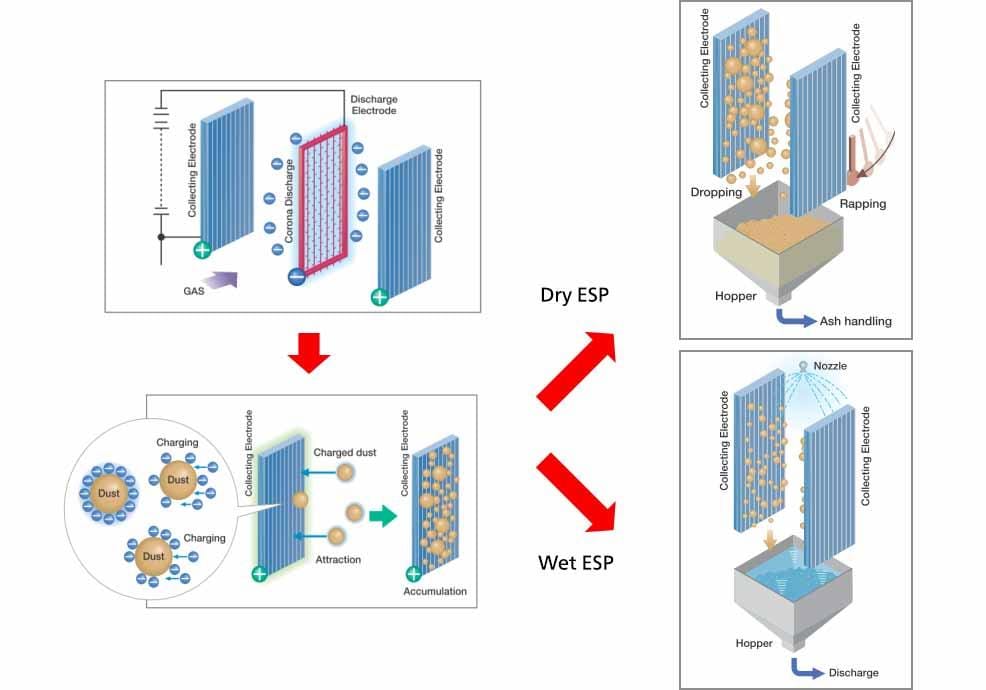
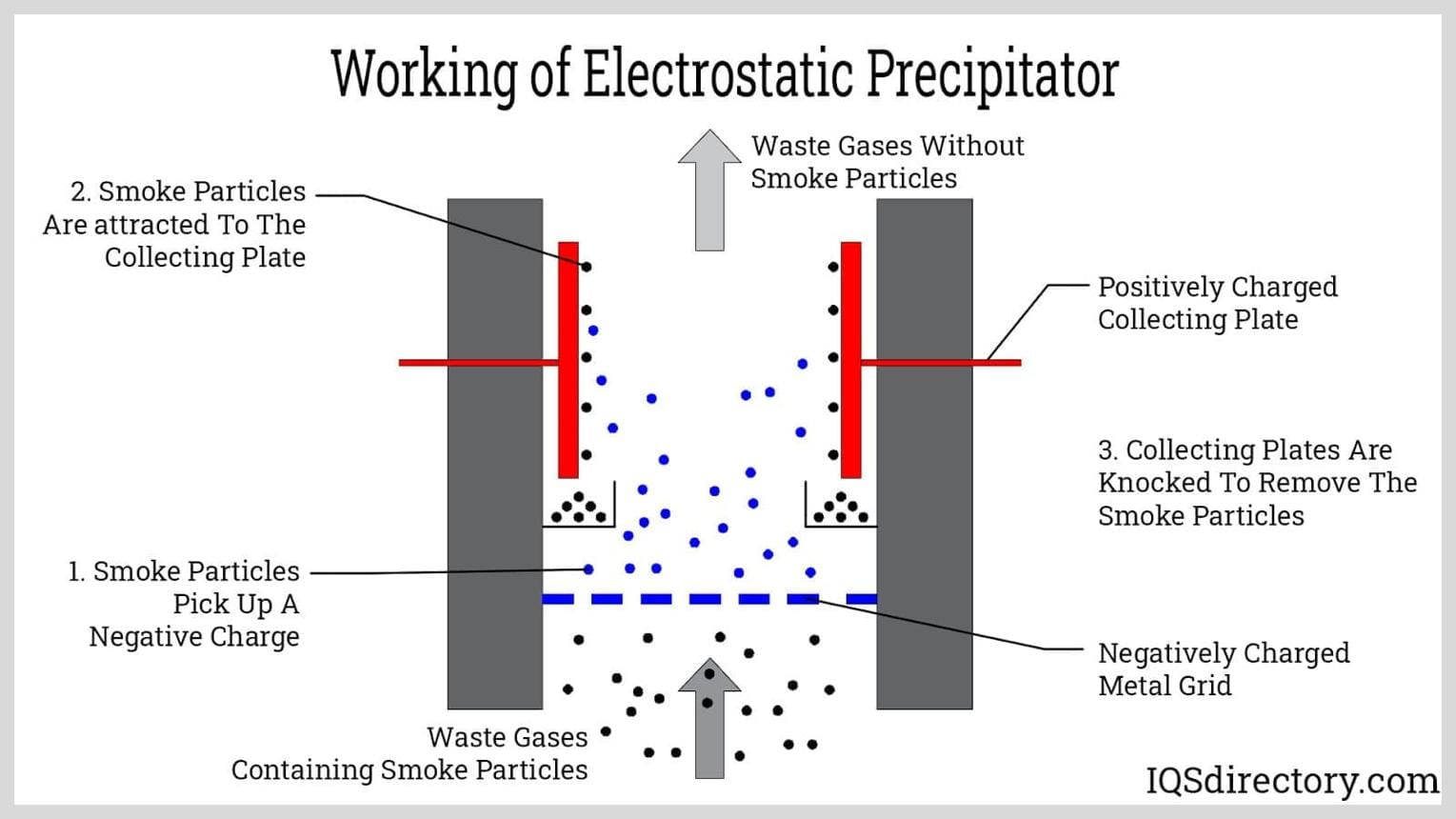
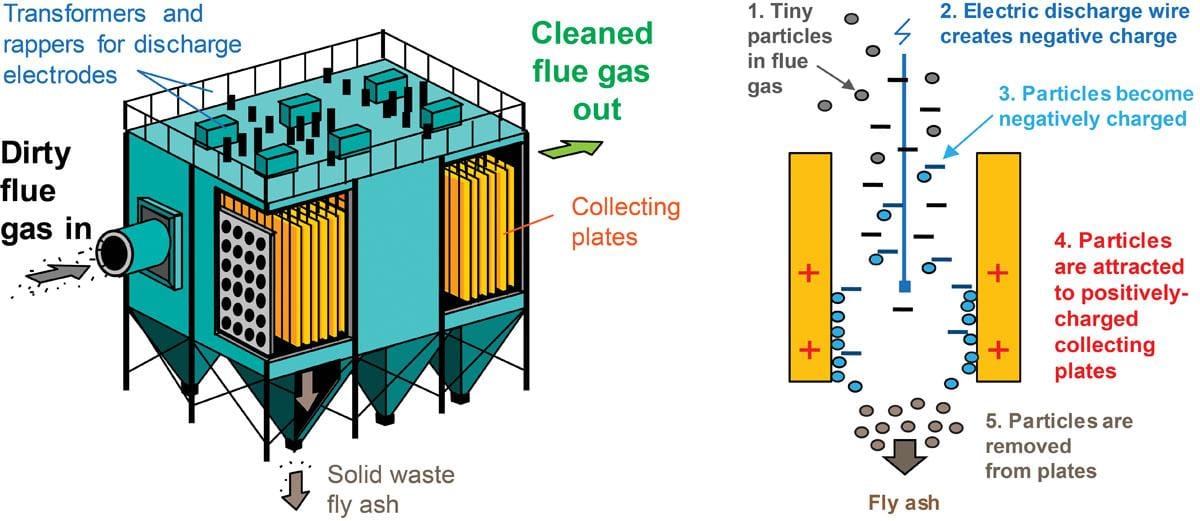
Sa kaibuturan nito, ang isang ESP ay gumagana sa apat na yugto:
- ✓Pag-charge ng Particle
- ✓Paglipat ng Partikulo
- ✓Koleksyon ng Particle
- ✓Pag-alis ng Alikabok
Nagsisimula ang proseso kapag ang mga gas na may dalang alikabok ay pumapasok sa silid ng ESP.
Yugto 1: Paglikha ng Corona Discharge
Ang pinakamahalagang penomeno sa loob ng isang ESP ay ang corona discharge.
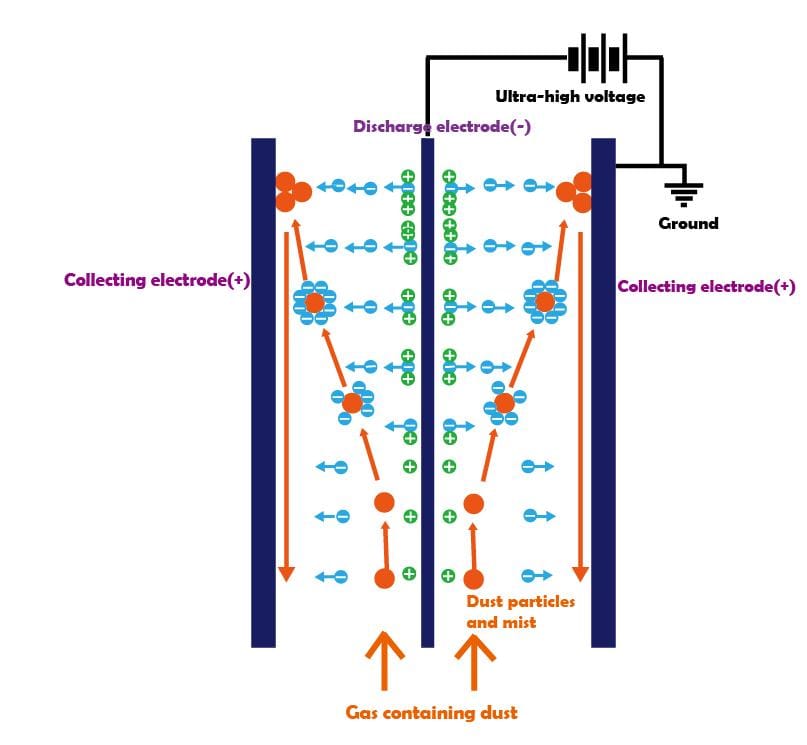
Ang isang high-voltage DC power supply ay karaniwang lumilikha ng:
- ✓30 kV hanggang 100 kV
- ✓Negatibong polaridad sa karamihan ng mga aplikasyon
Ang boltahe ay inilalapat sa pagitan ng:
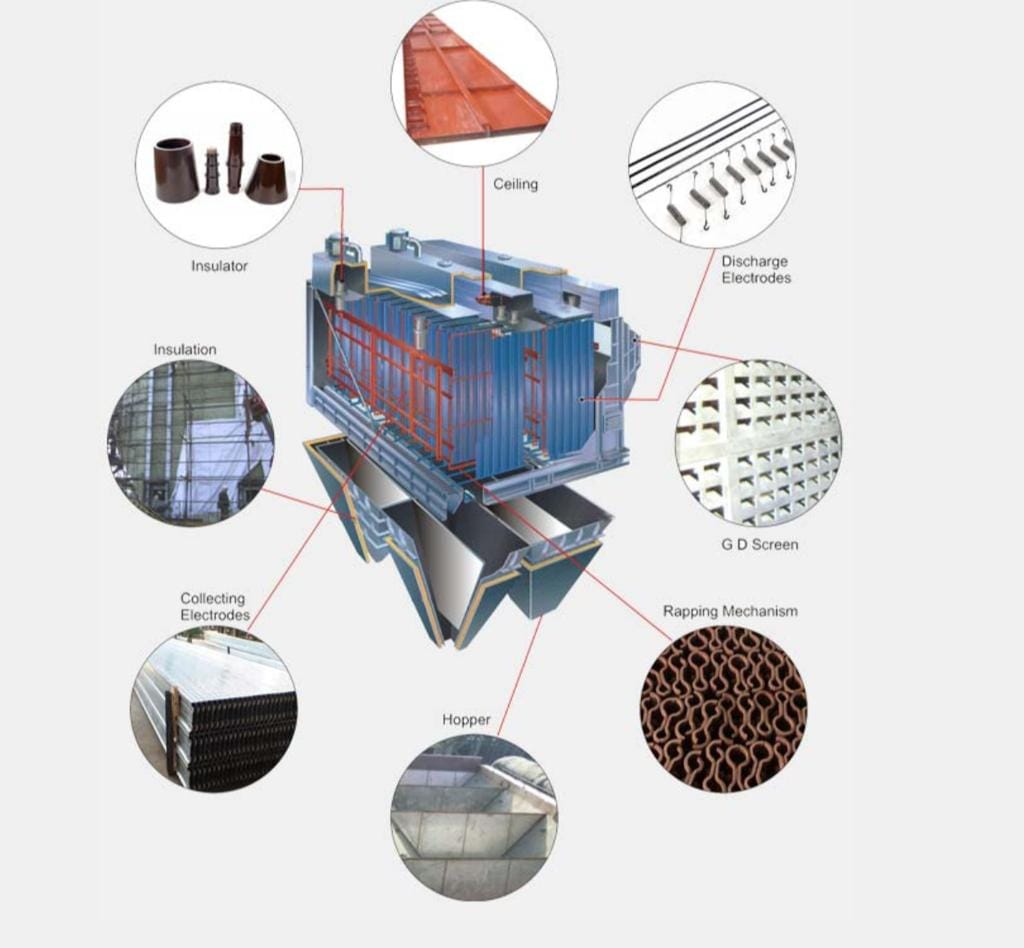
Mga Electrodes sa Paglabas
- ✓Manipis na mga alambre
- ✓Mga electrode na may tulis
- ✓Mga matibay na elektrod ng palo
Pagkolekta ng mga Elektrod
- ✓Malalaking grounded plates
- ✓Mga parallel na ibabaw ng koleksyon
Ang mataas na electric field ay nag-i-ionize sa nakapalibot na gas.
Habang tumataas ang boltahe, ang mga electron ay inilalabas sa daloy ng gas, na lumilikha ng:
- ✓Mga negatibong ion
- ✓Mga libreng elektron
- ✓Mga molekula ng gas na ionized
Ang rehiyong ito ay kilala bilang larangan ng korona.
Yugto 2: Mekanismo ng Pag-charge ng Particle
Kapag naitatag na ang corona discharge, ang mga particle ng alikabok ay nagiging kargadong elektrikal.
Dalawang mekanismo ng pag-charge ang nangingibabaw:
Pag-charge sa Patlang
Nangyayari ang field charging kapag ang mga ion ay bumangga sa mas malalaking partikulo.
Epektibo para sa:
- ✓Mga partikulo >1 μm
- ✓Alikabok ng semento
- ✓Lumipad abo
- ✓Alikabok ng apog
Ang partikulo ay nakakakuha ng negatibong karga na proporsyonal sa:
- ✓Diametro ng partikulo
- ✓Lakas ng larangan ng kuryente
- ✓Oras ng paninirahan
Pag-charge ng Difusyon
Nangingibabaw ang diffusion charging para sa mga ultrafine particle.
Epektibo para sa:
- ✓Mga partikulo <1 μm
- ✓Mga usok
- ✓Mga aerosol na submicron
Ang random na paggalaw ng mga ion ay nagdudulot ng akumulasyon ng karga sa mga ibabaw ng partikulo.
Yugto 3: Paglipat ng Partikulo
Pagkatapos makakuha ng karga, ang mga particle ay nakakaranas ng puwersang electrostatic.
Ang bilis ng paglipat ay ibinibigay ng:
Saan:
- ✓F = Puwersang elektrostatiko
- ✓q = Karga ng partikulo
- ✓E = Intensidad ng electric field
Lumilipat ang mga partikulo patungo sa mga naka-ground na collecting plate.
Mga salik na nakakaapekto sa migrasyon:
- ✓Laki ng partikulo
- ✓Resistivity ng partikulo
- ✓Bilis ng gas
- ✓Lakas ng larangan ng kuryente
- ✓Densidad ng karga ng partikulo
Yugto 4: Koleksyon ng Particle
Kapag ang mga partikulo ay nakarating sa mga plato ng koleksyon:
- ✓Na-neutralize ang karga
- ✓Dumidikit ang partikulo sa ibabaw ng plato
- ✓Unti-unting nabubuo ang patong ng alikabok
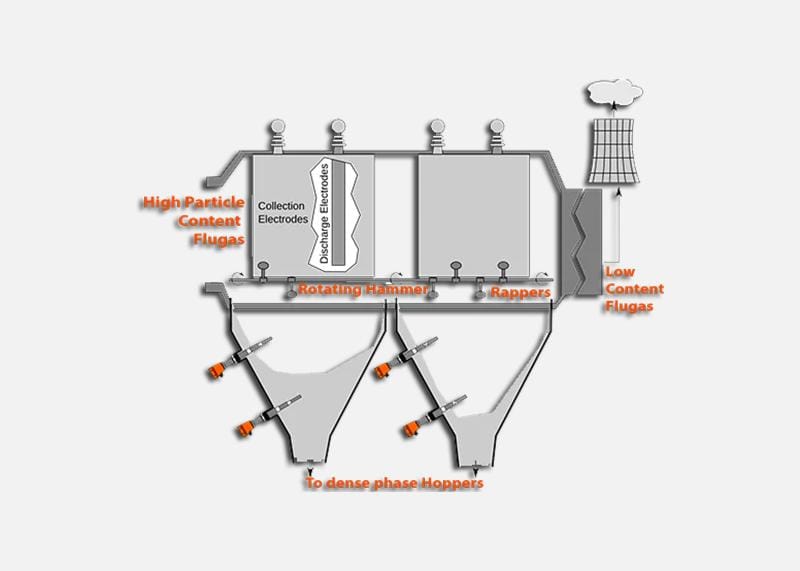
Ang nakolektang alikabok na ito ay nananatiling nakakabit hanggang sa maalis ito ng sistema ng pag-rapping.
Yugto 5: Pag-alis ng Alikabok sa Pamamagitan ng Pag-rap
Hindi maaaring pahintulutan ang pag-iipon ng alikabok nang walang hanggan.
Pana-panahong umaatake ang mga mechanical rapper:
Mga Plato ng Pagkolekta
para maalis ang naipon na alikabok.
Mga Electrodes sa Paglabas
upang maiwasan ang pagdami at mapanatili ang katatagan ng corona.
Ang alikabok ay nahuhulog sa:
- ✓Mga sistema ng hopper
- ✓Mga sistema ng paghawak ng abo
- ✓Mga sistema ng paghahatid ng niyumatik
para sa huling pagtatapon o muling paggamit.
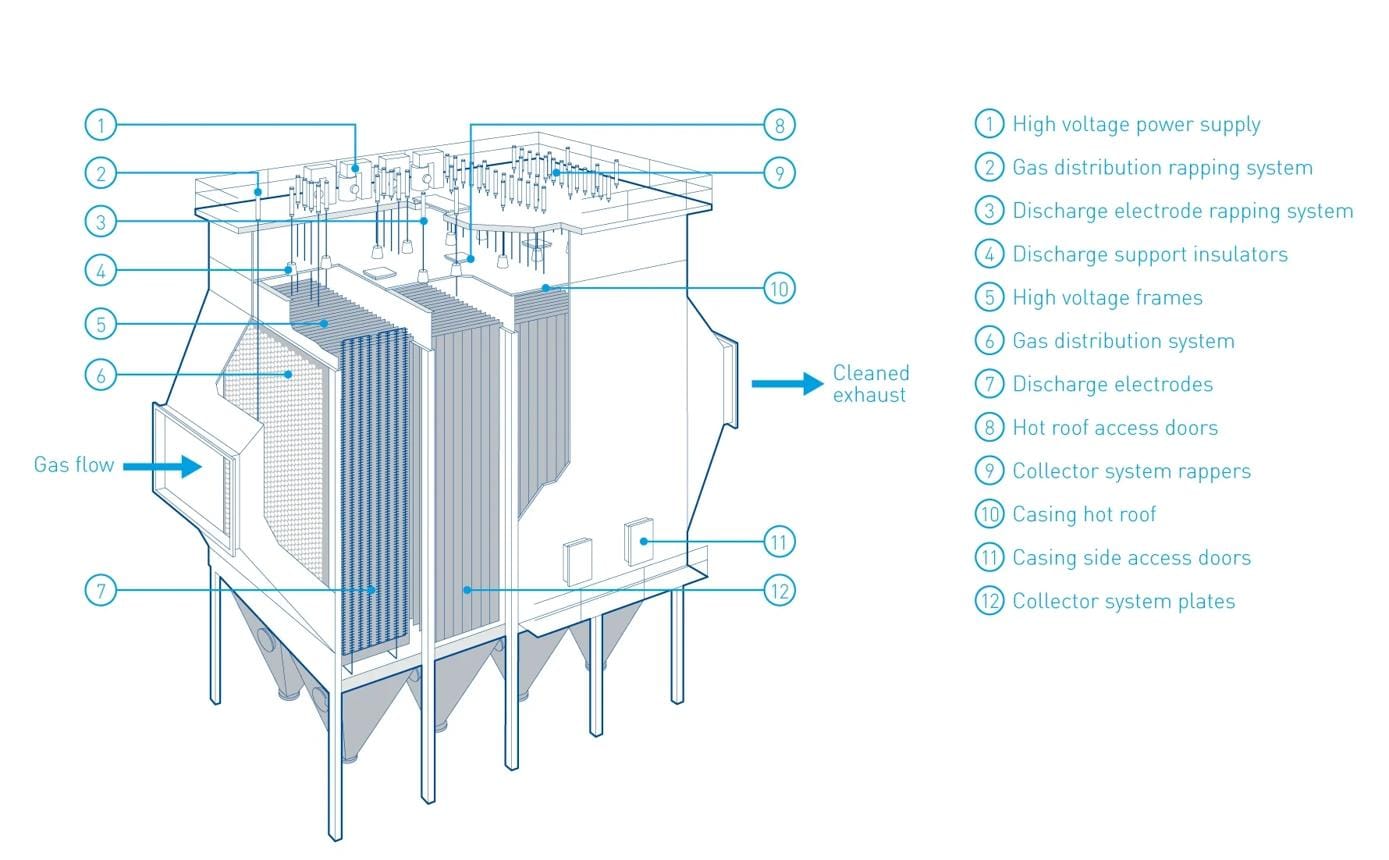
Mga Pangunahing Bahagi ng isang Electrostatic Precipitator
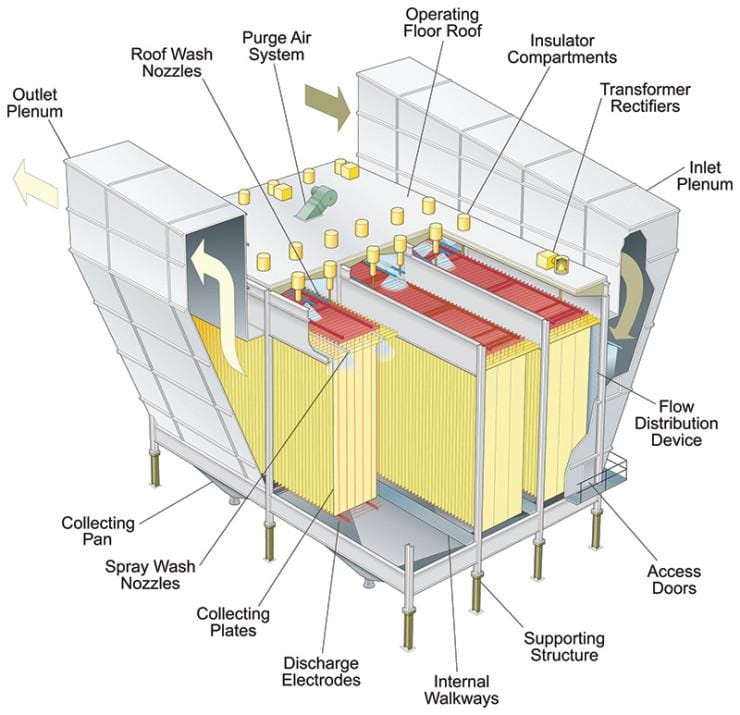
Sistema ng Pamamahagi ng Gas na Papasok
Mga function:
- ✓Pantay na pamamahagi ng daloy ng gas
- ✓Bawasan ang kaguluhan
- ✓Bawasan ang muling pagsipsip ng particle
Mga Bahagi:
- ✓Mga umiikot na pala
- ✓Mga butas-butas na screen
- ✓Mga plato ng pamamahagi
Mga Electrodes sa Paglabas
Layunin:
- ✓Lumikha ng corona discharge
Mga Uri:
- ✓Mga elektrod na kawad
- ✓Kawad na may tinik
- ✓Matigas na palo
- ✓Mga spiral electrode
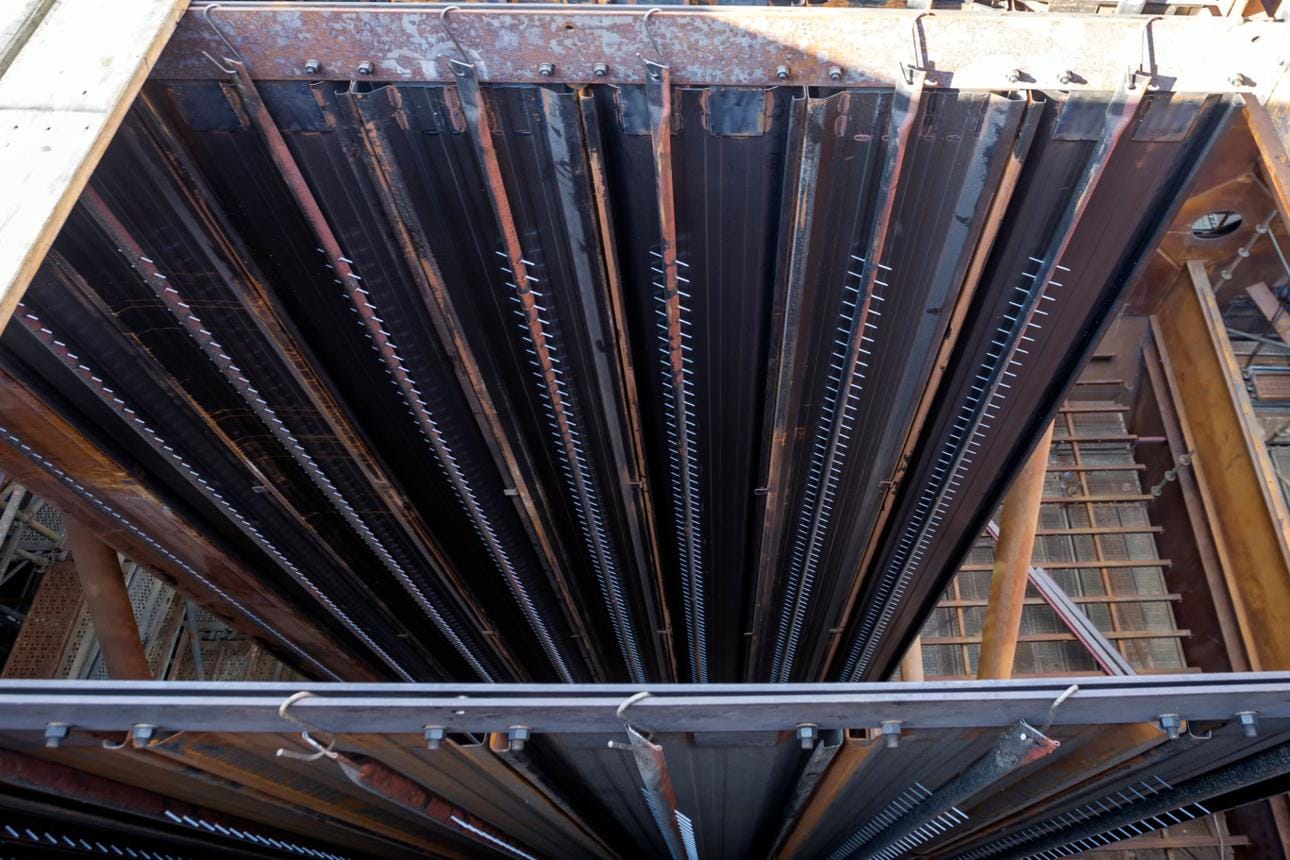
Mga Plato ng Koleksyon
Layunin:
- ✓Pagkuha ng mga naka-charge na particle
Karaniwang espasyo:
- ✓200–400 mm
Materyal:
- ✓Bakal na karbon
- ✓Mga haluang metal na lumalaban sa kalawang
Transformer Rectifier (TR Set)
Layunin:
- ✓I-convert ang AC sa mataas na boltahe na DC
Karaniwang output:
- ✓50–80 kV
- ✓Ilang daang milliamps
Sistema ng Hopper
Layunin:
- ✓Pagkolekta at pag-iimbak ng alikabok
Mga tampok ng disenyo:
- ✓Matarik na mga anggulo ng pader
- ✓Mga kaayusan laban sa pagtutulay
- ✓Mga sistema ng pampainit
Tuyong ESP vs Basang ESP
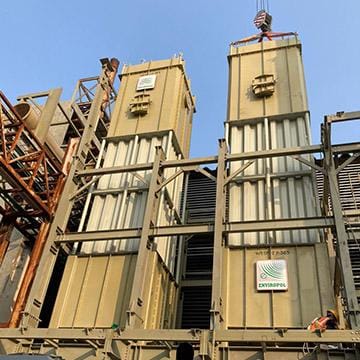
Tuyong ESP
Mga Application:
- ✓Lumipad abo
- ✓Alikabok ng semento
- ✓Alikabok ng apog
Mga kalamangan:
- ✓Mas mababang gastos sa pagpapatakbo
- ✓Walang nalilikhang wastewater
Mga Limitasyon:
- ✓Nabawasang kahusayan para sa mga malagkit na partikulo
Basang ESP
Mga Application:
- ✓Asido na ambon
- ✓Ambon ng langis
- ✓Mga pinong emisyon ng PM
Mga kalamangan:
- ✓Superior na pag-alis ng PM2.5
- ✓Walang muling pag-entrain
Mga Limitasyon:
- ✓Mas mataas na pagpapanatili
- ✓Mga kinakailangan sa paggamot ng tubig
Ekwasyon ng Deutsch-Anderson
Karaniwang tinatantya ang pagganap ng ESP gamit ang modelong Deutsch-Anderson.
Saan:
- ✓η = Kahusayan sa pagkolekta
- ✓A = Lugar ng koleksyon
- ✓w = Bilis ng paglipat
- ✓Q = Bilis ng daloy ng gas
Ipinapakita ng ekwasyong ito kung bakit ang mas malaking lugar ng koleksyon at mas mataas na bilis ng paglipat ay nagpapabuti sa kahusayan.
Mga Kritikal na Parameter ng Disenyo
Tiyak na Lugar ng Koleksyon (SCA)
Karaniwang mga halaga:
| Industriya | SCA |
|---|---|
| Semento | 60–100 m²/(m³/s) |
| Planta ng Kuryente | 100–200 m²/(m³/s) |
| bakal | 80–150 m²/(m³/s) |
Bilis ng Gas
Karaniwang saklaw:
- ✓1–2 m/s
Ang mas mataas na bilis ay maaaring maging sanhi ng:
- ✓Muling pag-entrain
- ✓Mas mababang kahusayan
Resistivity ng Partikulo
Saklaw ng ideal na resistivity:
- ✓10⁷–10¹⁰ ohm-cm
Mga Problema sa Mataas na Resistivity
Kapag lumampas ang resistivity sa:
- ✓10¹¹ ohm-cm
Maaaring lumitaw ang back corona.
Mga Epekto:
- ✓Nabawasan ang kahusayan
- ✓Limitasyon sa kuryente
- ✓Tumaas na emisyon
Karaniwan sa:
- ✓Abo ng karbon na may mababang asupre
- ✓Ilang alikabok ng hurno ng semento
Mga Problema sa Mababang Resistivity
Kapag ang resistivity ay masyadong mababa:
- ✓Hindi kayang panatilihin ng alikabok ang karga
- ✓Mga pagtaas ng muling pag-entrain
Resulta:
- ✓Nabawasang kahusayan sa pagkolekta
Mga Aplikasyon ng ESP sa Iba't Ibang Industriya
Mga Power Plant
Mga Pagkuha:
- ✓Lumipad abo
- ✓Hindi nasusunog na karbon
- ✓Mga particulate ng boiler
Karaniwang kahusayan:
- ✓99.5–99.9%
Mga Halamang Semento
Mga Application:
- ✓Tambutso ng hurno
- ✓Mga gas sa hilaw na gilingan
- ✓Mga gas na panglamig ng clinker
Mga Halamang Bakal
Mga Application:
- ✓Mga halamang sinter
- ✓Mga blast furnace
- ✓Mga sistema ng BOF
Mga Waste-to-Energy Plants
Mga Application:
- ✓Pag-alis ng particulate ng pagkasunog
- ✓Pagkontrol ng ambon ng asido (Wet ESP)
Mga Karaniwang Isyu sa Operasyon
Pagtaas ng Rate ng Spark
Mga Sanhi:
- ✓Pag-iipon ng alikabok
- ✓Mataas na kahalumigmigan
- ✓Mga sira sa kuryente
Bumalik na Corona
Mga Sanhi:
- ✓Mataas na resistivity abo
Solusyon:
- ✓Pagkondisyon ng gas
- ✓Iniksyon ng SO₃
Alikabok na Muling Nakapasok
Mga Sanhi:
- ✓Agresibong pag-rap
- ✓Mataas na bilis ng gas
Pagsaksak ng Hopper
Mga Sanhi:
- ✓Mahinang pag-init ng hopper
- ✓Malagkit na alikabok
ESP vs. Bag Filter
| Parameter | ESP | Filter ng Bag |
|---|---|---|
| Pagbaba ng Presyon | Napakababa | Katamtaman |
| Pagkonsumo ng Enerhiya | Mas mababa | Mas mataas |
| Pagkuha ng Pinong Particle | Mabuti | Magaling |
| Paghawak ng Temperatura | Magaling | Limitado ng media |
| Pagpapanatili | Mas mababa | Mas mataas |
| Bakas ng paa | Mas malaki | Mas maliit |
| Kakayahan sa Paglabas ng PM | Mabuti | Magaling |
Mga Hinaharap na Uso sa Teknolohiya ng ESP
Kabilang sa mga umuusbong na pag-unlad ang:
- ✓Mga Smart TR Controller
- ✓Pag-optimize batay sa AI
- ✓Mga sistemang Hybrid ESP-Baghouse
- ✓Mga advanced na kontrol sa pag-rap
- ✓Pagsubaybay sa pagganap gamit ang digital na teknolohiya
- ✓Mga sistema ng prediktibong pagpapanatili
Ang mga teknolohiyang ito ay nagbibigay-daan sa pinahusay na kahusayan, nabawasang konsumo ng kuryente, at pinahusay na pagsunod sa lalong mahigpit na mga pamantayan sa emisyon.
Mga Madalas Itanong (FAQ)
Paano gumagana ang electrostatic precipitator?
Sinisingil ng ESP ang mga particle ng alikabok na nasa hangin gamit ang isang high-voltage electric field at hinihila ang mga ito patungo sa mga grounded collection plate kung saan sila sinasalo at tinatanggal.
Ano ang kahusayan ng isang ESP?
Nakakamit ng mga modernong ESP ang kahusayan sa pagitan ng 99% at 99.9% depende sa mga katangian ng particle at mga parametro ng disenyo.
Ano ang pagkakaiba ng Tuyong ESP at Basang ESP?
Kinokolekta ng mga tuyong ESP ang mga tuyong particulate matter tulad ng fly ash, habang tinatanggal naman ng mga Wet ESP ang mga pinong particulate, aerosol, at acid mists gamit ang patuloy na hinuhugasang mga pangongolekta na ibabaw.
Aling mga industriya ang gumagamit ng mga ESP?
Mga industriya ng pagbuo ng kuryente, semento, bakal, pagmimina, pulp at papel, waste-to-energy, at pagproseso ng kemikal.
Makakatugon ba ang mga ESP sa mga modernong pamantayan ng emisyon?
Oo. Ang mga ESP na maayos ang disenyo at pagpapanatili ay maaaring makamit ang mahigpit na mga limitasyon sa emisyon ng particulate. Gayunpaman, maraming planta ang nag-a-upgrade sa mga hybrid system o bag filter kapag kinakailangan ang mas mababang emisyon ng outlet.
Konklusyon
Ang mga electrostatic precipitator ay nananatiling isa sa mga pinaka-mahusay at matipid na teknolohiya para sa malawakang pagkontrol ng particulate. Sa pamamagitan ng paggamit ng corona discharge, particle charging, migration, at mga mekanismo ng pagkolekta, maaaring mag-alis ang mga ESP ng milyun-milyong tonelada ng mga emisyon ng industrial particulate taun-taon. Ang pag-unawa sa mga prinsipyo ng electrical, mechanical, at process engineering sa likod ng operasyon ng ESP ay nakakatulong sa mga plant engineer na ma-optimize ang performance, mapabuti ang pagsunod sa mga kinakailangan, at pahabain ang buhay ng kagamitan.
Mag-subscribe para sa mga Pananaw sa Teknikal na Pagsasala
Manatiling updated sa mga pinakabagong kaganapan sa:
- ✓Mga Electrostatic Precipitator (ESP)
- ✓Mga Filter ng Bag
- ✓Mga Sistema ng Hybrid Filtration
- ✓Mga Teknolohiya sa Pagsunod sa Emisyon
- ✓Inhinyeriya sa Pagkontrol ng Alikabok sa Industriya
Mag-subscribe sa aming newsletter para sa mga ekspertong pananaw sa APC at mga gabay sa inhenyeriya.
 FIL
FIL  EN_US
EN_US  UR
UR  AR
AR  NL
NL  MS
MS  DE
DE  FR
FR  IT
IT  FA
FA  VI
VI  KO
KO  RU
RU  ID
ID  KK
KK  UZ
UZ  BG
BG  CS
CS  HU
HU  SL
SL  SV
SV  PL
PL  TR
TR  FI
FI  ES
ES