- A diaphragm valve for bag filter systems regulates air pulses to clean filters.
- Proper maintenance prevents pressure drops and high energy costs.
- Choosing the right material like Viton or Nitrile ensures long service life for your pulse jet valve.
- Reliable components from Intensiv-Filter Himenviro keep systems running.
What is a Diaphragm Valve for Bag Filter Systems?
A diaphragm valve for bag filter units acts as a movable membrane. It controls how air pulses move through the equipment. This component sits inside the pulse-jet valve. It opens fast to let out a burst of compressed air. This air blast hits the bags in the stoffen filters.
- The dust collector diaphragm valve releases air in a split second.
- This quick movement creates a shockwave.
- The wave shakes the dust cake off the surface of the baghouse filters.
- Clean filters allow air to flow through the system with less effort.
How Pulse Jet Diaphragm Valves Work
The pulse jet diaphragm valve working process depends on fast changes in air pressure. This simple mechanical movement cleans dust from filters. Here are the steps:
- Compressed air enters the valve chamber and fills the pilot chamber.
- The solenoid gets an electrical signal and lets air escape from the pilot chamber.
- Pressure drops quickly above the diaphragm.
- This imbalance causes the diaphragm to lift up.
- A quick, high-pressure air pulse shoots into the filter bags to knock off dust.
- The solenoid stops getting the signal and the diaphragm closes the valve again.
The Role of the Solenoid in Valve Operation
The diaphragm solenoid valve works like a switch that turns electricity into a physical air burst. It acts as the brain for the system. When a current hits the solenoid coil, it pulls a small pin. This action starts the pressure change inside the pilot chamber. Most systems run on 24VDC or 220VAC power. This lets a computer send the exact timing for each pulse — a very effective way to control airflow in industrial systems.
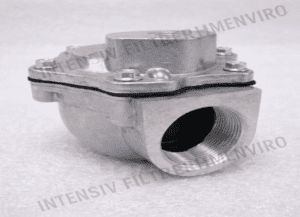
Types of Dust Collector Diaphragm Valves
A dust collector diaphragm valve controls air flow in cleaning systems. Different systems need different valve styles for the best results. The table below explains the main options available.
| Valve Type | Mounting Style | Beste gebruik |
|---|---|---|
| Right angle valve | Pipe-mounted | Standard systems with clear pipe access |
| Immersed valve | Inside air tank | Systems needing very high air flow |
| Threaded valve | Screws into place | Quick repairs and small setups |
| Flanged valve | Bolts onto pipes | Large systems needing strong seals |
Right angle valves are common for pipe-mounted systems and work well for basic dust collection needs. Immersed valves sit directly inside the air tank allowing faster air movement. The right choice depends on the layout of your equipment.
Key Components of a Diaphragm Kit for Pulse Valve
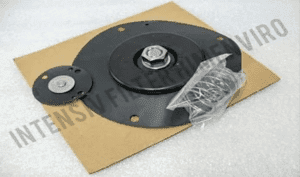
When a valve stops working well, it usually needs a fresh set of parts. A diaphragm kit for pulse valve maintenance contains everything required to rebuild the unit. These kits help you fix leaks and restore full power to your air pulses.
The kit includes these specific parts:
- The main elastomer membrane: This flexible rubber piece is the primary moving part that opens and closes the valve.
- Reinforcing springs: These metal coils sit behind the membrane. They ensure the valve closes tightly after every air pulse.
- Internal O-rings: These small rubber circles create a seal. They prevent air leaks around the valve body during operation.
You should inspect these parts if the pulse sounds weak or if the system loses pressure. Replacing the whole set keeps the machine running without costly downtime. Most kits fit specific valve models, so check your equipment size before you buy.
Advanced Membrane Solutions for Reliable Pulse Performance
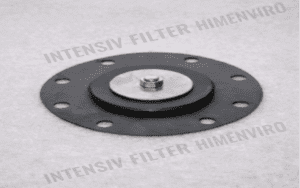
High-performance membranes play a key role in maintaining consistent and efficient pulse jet operation, especially in demanding industrial environments.
De 54444 Membrane C50 is designed for heavy-duty applications, offering excellent strength and durability under continuous pressure conditions. It is well-suited for plants where stable pulsing and long service life are critical for uninterrupted operation.
De 81741 Membrane C41 provides enhanced flexibility, making it ideal for standard temperature applications. Its balanced performance ensures smooth operation and reduced wear over time.
Both membrane types are engineered to withstand millions of pulse cycles, helping ensure reliable performance and minimizing unexpected downtime in industrial filtration systems.
Common Bag Filter Cleaning Issues and Diaphragm Failure
A bag filter cleaning issue from diaphragm failure often starts with a small hiss near the pulse valves. This noise means air is leaking out constantly — making your air compressor work too hard and costing extra money on energy bills every month.
You can find a bad valve with the tissue paper test. Hold a small piece of tissue paper near the valve outlet. If the valve is stuck open, the paper will flap or blow away even when the system is not pulsing. This simple test shows you exactly which valve needs attention.
Moisture in the air lines often creates big problems. Water inside the lines makes the rubber in the diaphragm get hard. Eventually, the material becomes brittle and starts to crack. Once a crack forms, the valve cannot close properly.
Incorrect pulse timing also ruins your filter performance. If the pulses do not fire correctly, dust stays on the bags causing them to clog up quickly. You will see the differential pressure go up on your gauge — high pressure means the system struggles to move air through the filter.
Maintenance and Pulse Valve Diaphragm Replacement
You should perform regular pulse valve diaphragm replacement to keep your plant running well in 2026. You can learn more about professional onderhoud en reparatie services to help with this task.
Follow these steps to replace a diaphragm:
- Shut off the main air supply to the system.
- Open the bleed valve to depressurize the tank completely. Safety is your top priority here.
- Remove the bolts on the valve cover carefully.
- Take out the old, worn diaphragm.
- Clean the valve seat surface. Remove any dirt or rust so the new seal sits flat.
- Place the new diaphragm into position.
- Put the cover back on and tighten the bolts in a cross pattern. Tighten them evenly to avoid leaks.
- Turn the air back on slowly.
- Test the valve operation while the system is at full pressure to confirm it seals tight.
Selecting a Diaphragm Valve Supplier in India
Finding a reliable pulse valve diaphragm supplier in India is vital for plant operations. Quality matters because cheap parts fail quickly and cause expensive shutdowns. A good supplier offers OEM quality parts that fit machines perfectly.
Always ask the vendor for material test reports. These documents prove the rubber can handle high heat and tough working conditions. If a machine breaks down, you need a replacement right away. Intensiv-Filter Himenviro maintains a strong reputation for these supplies — choosing them helps companies avoid long waits for parts.
The Right Diaphragm Makes All the Difference in Pulse Jet Performance
Diaphragms play a critical role in ensuring consistent pulse performance and reliable operation in bag filter systems. At Intensiv Filter Himenviro (IFH), we bring over 100 years of engineering expertise and a presence across 110+ countries to design diaphragms that perform under real operating conditions — not just standard specifications.
While established brands like Goyen and ASCO have set strong industry benchmarks, IFH combines proven compatibility with deep system-level understanding to deliver reliable sealing, stable pulsing, and long-term efficiency. This enables plants to maintain dependable performance while optimizing lifecycle costs — with IFH as a trusted engineering partner.
Conclusie
Diaphragm valves act as the most essential part of a baghouse cleaning system. You should replace them every 12 to 24 months for the best results. Taking care of your valves keeps the air clean and lowers your total operating costs.
Veelgestelde vragen
Which diaphragm will give longer life in my operating conditions?
IFH recommends application-specific material selection to ensure longer life based on temperature, pressure, and air quality.
Why am I seeing air leakage or weak pulsing in my bag filter?
This is often due to diaphragm wear or poor sealing. IFH diaphragms are engineered for tight sealing and consistent pulse performance.
Can IFH diaphragms fit my existing pulse valves?
Yes, IFH diaphragms are designed to integrate seamlessly with widely used industry-standard pulse valve systems.
How can I reduce maintenance frequency of diaphragms in my plant?
Using IFH engineered diaphragms with correct material and operating compatibility helps reduce failures and maintenance cycles.


 NL
NL  EN_US
EN_US  UR
UR  AR
AR  MS
MS  DE
DE  FR
FR  IT
IT  FA
FA  VI
VI  KO
KO  RU
RU  ID
ID  FIL
FIL  KK
KK  UZ
UZ  BG
BG  CS
CS  HU
HU  SL
SL  SV
SV  PL
PL  TR
TR  FI
FI  ES
ES