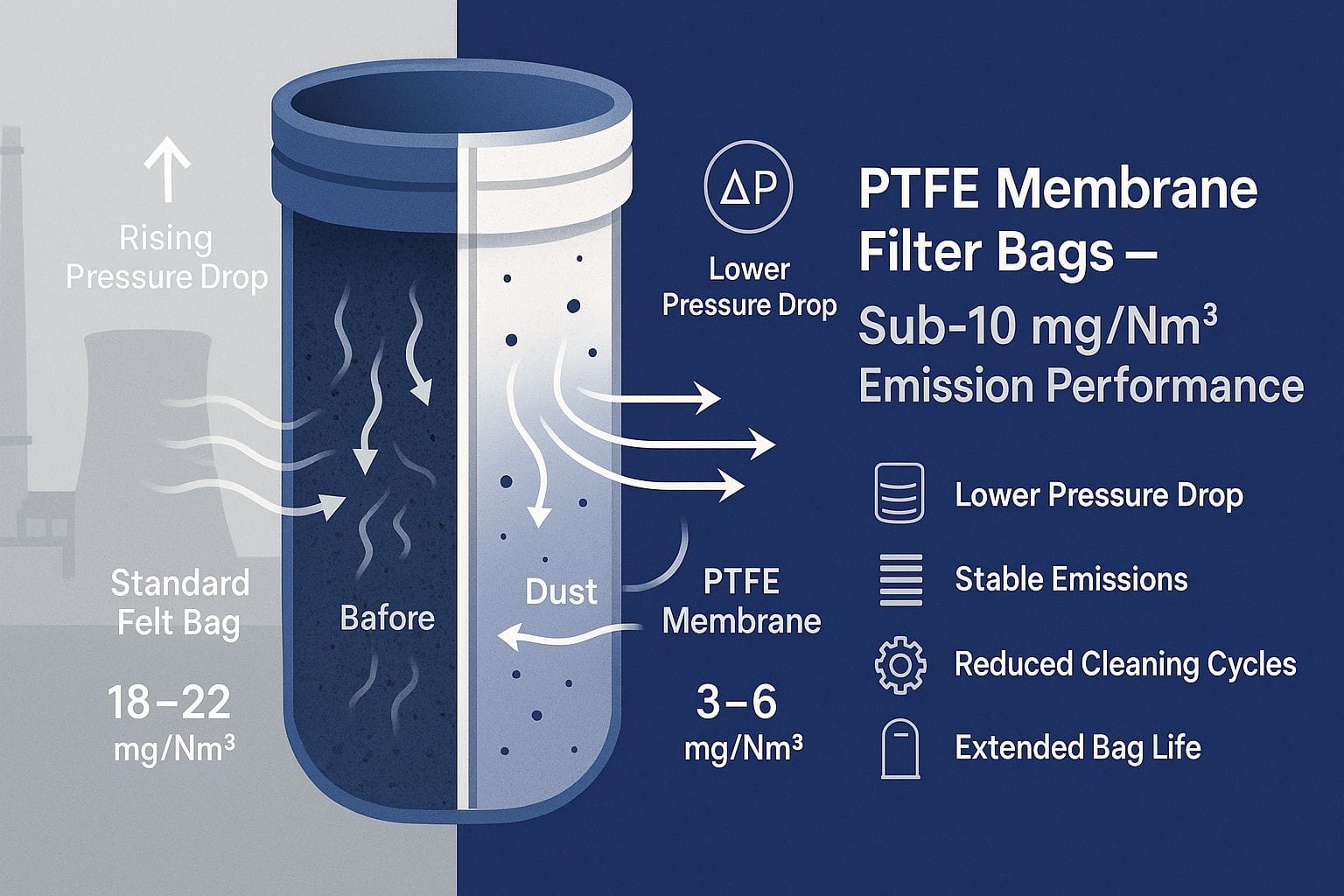
Teollisuuden päästönormit sementti-, teräs-, energia- ja prosessiteollisuudessa ovat tiukentuneet ympäri maailmaa. Laitosten odotetaan pitävän päästöt jatkuvasti alle 10 mg/Nm³:n, ei vain kontrolloiduissa testeissä, vaan myös jokapäiväisessä toiminnassa. Tämän vaatimustenmukaisuustason saavuttaminen samalla kun tuotantotunnit suojataan, vältetään pussisuodattimien seisokit ja pidetään käyttökustannukset vakaina, on tullut suunnittelu- ja ympäristötiimien tärkeimmäksi prioriteetiksi.
PTFE-kalvosuodatinpusseista on tullut luotettavin suodatustekniikka alle 10 mg/Nm³ päästöjä kohdistaville laitoksille. Niiden kyky yhdistää erittäin alhaiset päästöt vakaaseen painehäviöön ja pitkään käyttöikään on siirtänyt ne erikoistuotteesta alan standardiksi. Tässä artikkelissa selitetään, miten PTFE-kalvopussit saavuttavat nämä tulokset, mitä parannuksia laitokset näkevät päivityksen jälkeen ja miten Intensiv Filter Himenviro tukee pitkän aikavälin suorituskykyä.
1. Mikä tekee PTFE-kalvopusseista ylivoimaisen ratkaisun
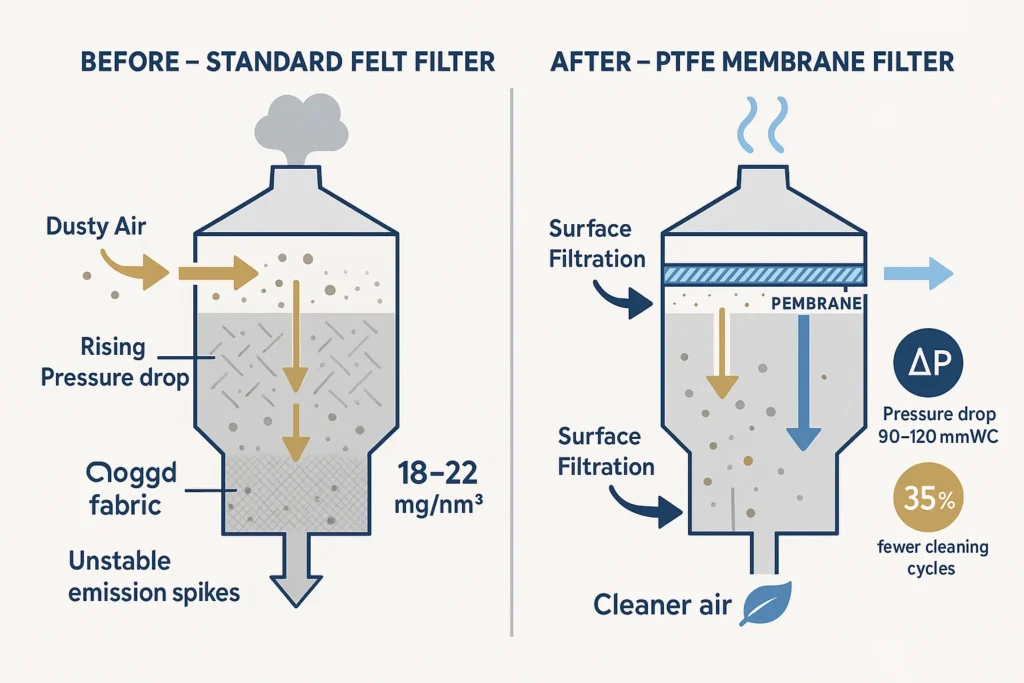
Perinteiset neulahuopapussit toimivat syväsuodatuksella. Pöly tunkeutuu syvälle kankaaseen, tukkii huovan vähitellen ja pakottaa puhdistusjärjestelmän työskentelemään tehokkaammin ajan myötä. Tämä johtaa painehäviön ennenaikaiseen kasvuun, epävakaisiin päästöihin ja pussin nopeampaan kulumiseen.
PTFE-kalvopussit toimivat eri tavalla. Mikrohuokoinen PTFE-kalvo on kiinnitetty pohjakankaaseen, mikä luo sileän pinnan, joka vangitsee hiukkaset ulkopuolelle. Pöly jää pinnalle sen sijaan, että se uppoaisi huovan sisään. Tämä rakenne varmistaa puhtaammat pulssit, tasaisen ilmavirran ja kyvyn vangita alle mikronin kokoisia hiukkasia jo ensimmäisestä käyttötunnista lähtien.
PTFE-kalvoihin päivittävät laitokset raportoivat jatkuvasti päästöiksi 3–6 mg/Nm³, mikä tarjoaa mukavan marginaalin alle 10 mg/Nm³:n vaatimuksen.
Varmista puhdas ilma ja määräysten noudattaminen jo tänään
2. Miten PTFE-kalvoteknologia saavuttaa alle 10 mg/Nm³:n suorituskyvyn
PTFE-kalvojen huokosrakenne on erittäin tasainen. Tämä mahdollistaa hienojen hiukkasten talteenoton rajoittamatta ilmavirtausta. Tuloksena on vakaa pölykakku, joka muodostuu ja vapautuu puhtaasti pulssin aikana varmistaen ennustettavan toiminnan koko pussin elinkaaren ajan.
Tämä vakaus on olennaista laitoksissa, joissa prosessiolosuhteet vaihtelevat. Uunin siirtymät, polttoaineen vaihdot, korkean kosteuden jaksot tai kattilan kuormituksen vaihtelut aiheuttavat usein päästöpiikkejä vakiopusseja käytettäessä. PTFE-kalvot käsittelevät näitä vaihteluita paljon paremmin ja pitävät päästöt alhaisina jopa häiriötilanteissa.
3. Pienemmän painehäviön etu
Merkittävä PTFE-kalvopussien käyttöetu on paine-eron pieneneminen ja vakauttaminen. Huopapussien painehäviö alkaa tyypillisesti 150–170 mmWC:n välillä, kun taas PTFE-kalvojen painehäviö alkaa usein noin 90–110 mmWC:stä. Mikä tärkeintä, ne säilyttävät tämän alueen huomattavasti pidempään.
Vakaa painehäviö tarjoaa useita etuja:
- Alennettu ID-tuulettimen kuormitus
- Pienempi sähkönkulutus
- Tasaisempi ilmavirtaus pussisuodattimen läpi
- Vähemmän ja hellävaraisempia pulssisuihkutusjaksoja
- Laukun kankaan ja mekaanisten osien vähäisempi kuluminen
Koska pöly ei tunkeudu huopaan, PTFE-pussien ΔP-arvo kasvaa hitaammin, minkä ansiosta puhdistusjärjestelmä toimii huomattavasti pienemmällä rasituksella.
4. Realistinen ennen ja jälkeen -suorituskyvyn vertailu
Alla on käytännön vertailu, joka perustuu sementtitehtaissa, teräksen pölynpoistojärjestelmissä ja WHR-kattiloissa havaittuihin suorituskyvyn parannuksiin PTFE-kalvopusseihin siirtymisen jälkeen.
| Parametri | Ennen – Standard Felt | Jälkeen – PTFE-kalvo |
|---|---|---|
| Päästöalue | 18–22 mg/Nm³ | 3–6 mg/Nm³, jatkuvasti alle 10 mg/Nm³ |
| Paine-ero | Nopea kasvu, epävakaa | Vakaa 90 ja 120 mmWC:n välillä |
| Puhdistustiheys | Korkea pölyn tunkeutumisen vuoksi | Jopa 35% alennettu |
| Laukun elämä | 1,5–2 vuotta | 2,5–4 vuotta |
| Paineilman käyttö | Kohonnut | Huomattavasti matalampi |
| Seisokki | Useammin | Ennakoitavissa ja vähennetty |
Laitokset kokevat selvästi vakaamman pussisuodattimen toiminnan ja pienemmät operatiiviset riskit PTFE-kalvoihin siirtymisen jälkeen.
5. Sovellukset, joissa PTFE tarjoaa maksimaalisen iskun
PTFE-kalvopussit toimivat erityisen hyvin vaativissa ympäristöissä, kuten:
- Korkean lämpötilan prosessit
- Happamia tai syövyttäviä ominaisuuksia omaava pöly
- Kosteudelle herkät toiminnot
- Tahmeaa tai erittäin hienoa pölyä tuottavat prosessit
Teollisuussektorit, kuten sementti-, teräs-, energiantuotanto-, kemikaali- ja hiilimustan valmistus, hyötyvät merkittävästi tästä teknologiasta. PTFE-kalvot estävät kankaan tukkeutumisen, säilyttävät läpäisevyyden ja kestävät kemiallista hajoamista, joka tyypillisesti lyhentää tavallisten pussien käyttöikää.
6. Huollon ja suunnittelemattomien seisokkiaikojen väheneminen
Huoltotiimit huomaavat eron välittömästi PTFE-pussien asentamisen jälkeen. Sileä PTFE-pinta ei päästä pölyä itseensä, mikä tarkoittaa, että pulssitus on tehokkaampaa ja tasaisempaa. Tämä parantaa ennustettavuutta, minimoi kuumapistevikoja ja vähentää hätäpysäytysten tarvetta.
Laitoksissa on vähemmän painehäviöhälytyksiä, tasaisempi ilmavirtaus ja huomattavasti harvempi pussien vaihtoväli. Jatkuvatoimisissa prosesseissa, joissa jokainen seisokki vaikuttaa tuottavuuteen, tästä luotettavuudesta tulee merkittävä etu.
7. Miksi PTFE-kalvot ovat taloudellisesti järkeviä
Vaikka PTFE-kalvopussit vaativat suuremman alkuinvestoinnin, niiden elinkaaren hyödyt ovat suuremmat kuin kustannukset. Laitokset saavat investointinsa takaisin seuraavasti:
- Pienempi sisäinen puhaltimen energia
- Vähentynyt paineilman kulutus
- Vähemmän laukunvaihtoja
- Vähemmän työvoimaa ja huoltoa
- Vakaa päästötaso, joka estää rangaistukset
Päivitys maksaa itsensä usein takaisin operatiivisten säästöjen ja parantuneen tuotannon jatkuvuuden kautta.
8. Keskeiset huomioitavat asiat PTFE-kalvopusseja valittaessa
Kaikki PTFE-kalvopussit eivät ole samanlaisia. Tasaisen suorituskyvyn varmistamiseksi tehtaiden tulisi arvioida tekijöitä, kuten kalvon tasaisuus, laminoinnin laatu, saumojen tiivistys, alustan yhteensopivuus ja valmistuksen tarkkuus. Oikea yhdistelmä varmistaa suodatustehokkuuden säilymisen muuttumattomana pussin koko käyttöiän ajan.
Hyvin suunniteltu PTFE-pussi ylläpitää alhaiset päästöt ja vakaan ΔP-arvon laajalla lämpötila- ja pölyolosuhteiden alueella.
Tutustu ratkaisuvalikoimaamme:

Miksi Intensiv Filter Himenviro on PTFE-kalvoratkaisujen luotettava kumppani
Yli vuosisadan kokemuksella suodatustekniikasta Intensiv Filter Himenvirolla on syvällinen asiantuntemus PTFE-kalvosuodatinpussien suunnittelussa ja valmistuksessa. Kalvomme on suunniteltu tarkkuutta, kestävyyttä ja lämpöstabiiliutta silmällä pitäen. Jokainen pussi käy läpi huolelliset laatutarkastukset tasaisen suorituskyvyn ja pitkäaikaisen luotettavuuden varmistamiseksi vaativissa teollisuusympäristöissä.
Tuoteosaamisen lisäksi tarjoamme suodatusjärjestelmien suorituskyvyn diagnostiikkaa, toiminnan optimointitukea ja teknisiä auditointeja, joiden avulla laitokset voivat maksimoida suodatusjärjestelmänsä arvon.
Johtopäätös
PTFE-kalvosuodatinpusseista on tullut luotettavin ratkaisu alle 10 mg/Nm³:n päästöjen saavuttamiseksi. Niiden kyky ylläpitää alhainen painehäviö, pysyä puhdistettavina ja tarjota pitkä käyttöikä tekee niistä ensisijaisen valinnan vaatimustenmukaisuutta vaativiin toimintoihin. PTFE-kalvoihin päivittävät laitokset kokevat paremman vakauden, vähemmän häiriöitä ja mitattavia alennuksia käyttökustannuksissa.
Jos kasvisi on nousussa ΔP, epävakaat päästöt tai toistuvat seisokit, PTFE-kalvopussit voivat mullistaa suodatustehon.
Hanki ilmainen tekninen arviointi Intensiv Filter Himenvirolta ja ota selvää, kuinka PTFE-kalvopussit voivat auttaa laitostasi saavuttamaan vakaat, luotettavat ja määräystenmukaiset alle 10 mg/Nm³:n päästöt.
Pyydä suodatinmateriaalien suorituskyvyn arviointi jo tänään.
Usein kysytyt kysymykset
PTFE-suodatinkangas on polytetrafluoroeteenistä valmistettu tehokas suodatuskangas. Se on suunniteltu teollisuussuodattimiin, joissa lämpötila, kemikaalialtistus ja hienojakoisten hiukkasten kuormitus ovat korkeita. Toisin kuin tavalliset neulahuopakankaat, PTFE-suodatinkangas tarjoaa poikkeuksellisen kemiallisen inertin, hydrofobisuuden ja lämmönkestävyyden. Tämä tekee siitä ihanteellisen sovelluksiin, joissa vaaditaan jatkuvasti alhaisia päästöjä, pitkää käyttöikää ja kestävyyttä kosteudelle tai happamille kaasuille.
PTFE-suodatinkangasta käytetään yleisesti PTFE-kalvosuodatinpussien pohjana, sillä se tarjoaa erinomaisen pölyn vapautumisen ja erittäin alhaisen hiukkasten tunkeutumisen.
PTFE-suodattimia käytetään teollisuudessa, jossa erittäin alhaisten päästöjen ja vakaan painehäviön saavuttaminen on kriittistä. Ne on erityisesti suunniteltu vaativiin ympäristöihin, joissa esiintyy syövyttäviä kaasuja, korkeita lämpötiloja, tahmeaa pölyä tai erittäin hienojakoisia hiukkasia.
Tyypillisiä käyttökohteita ovat sementtiuunit, teräsuunien pölynpoistojärjestelmät, WHR-kattilat, hiilimustan käsittely, kemialliset reaktorit ja korkean kosteuden prosessit. PTFE-suodattimet varmistavat pussisuodattimen vakaan suorituskyvyn, lyhyemmät seisokkiajat, pidemmän pussien käyttöiän ja tiukkojen alle 10 mg/Nm³ päästönormien noudattamisen.
PTFE-suodatin on pölynsuodatusmateriaali, joka käyttää mikrohuokoista PTFE-pintaa hienojen hiukkasten vangitsemiseen pinnan tasolla sen sijaan, että ne tunkeutuisivat kankaaseen. Tämä mekanismi, joka tunnetaan pintasuodatuksena, varmistaa, että pöly muodostaa ohuen, helposti puhdistettavan kerroksen kalvolle.
Tuloksena on jatkuvasti alhaiset päästöt, hitaampi paine-eron nousu, puhtaammat pulssisyklit ja huomattavasti pidempi käyttöikä verrattuna tavallisiin neulahuopasuodattimiin. PTFE-suodattimet toimivat luotettavasti myös prosessihäiriöiden, korkean kosteuden tai äkillisten pölypiikkien aikana.
PTFE-kalvosuodatinpussit ovat tehokkaita teollisuuspölynkeräyspusseja, jotka on valmistettu laminoimalla mikrohuokoinen PTFE-kalvo suodatinkankaalle. Nämä pussit keräävät mikronia pienempiä hiukkasia pinnalta, minkä ansiosta teollisuus voi saavuttaa jatkuvasti alle 10 mg/Nm³:n päästötasot.
Ne tarjoavat useita suorituskykyetuja, kuten pienen alkupainehäviön, pienemmän pulssisuihkun taajuuden, pidemmän käyttöiän ja erinomaisen kestävyyden happoja, emäksiä ja kosteutta vastaan. PTFE-kalvopussit ovat ensisijainen valinta vaatimustenmukaisuutta noudattaville laitoksille, joilla pyritään luotettavaan ja jatkuvaan toimintaan.
 FI
FI  EN_US
EN_US  UR
UR  AR
AR  NL
NL  MS
MS  DE
DE  FR
FR  IT
IT  FA
FA  VI
VI  KO
KO  RU
RU  ID
ID  FIL
FIL  KK
KK  UZ
UZ  BG
BG  CS
CS  HU
HU  SL
SL  SV
SV  PL
PL  TR
TR  ES
ES